Baroxon® | Leading Boom Barrier Manufacturer

Parking Barriers for Underground Car Parks
Release time:
2026-10-28
An underground car park imposes constraints that an open car park does not. This guide covers headroom measurement, folding-arm geometry, traffic duty, safety and the access-control choices for a basement entrance.
For Saudi projects, begin with a site survey and the exact vehicle route, then compare barrier arm designs, duty ratings, safety equipment and access-control options. BAROXON's Saudi-facing catalogue includes automatic boom barriers, folding-arm options for restricted-height areas, ALPR/LPR vehicle recognition, RFID access and parking-management solutions. Confirm the selected model's actual specifications before procurement.
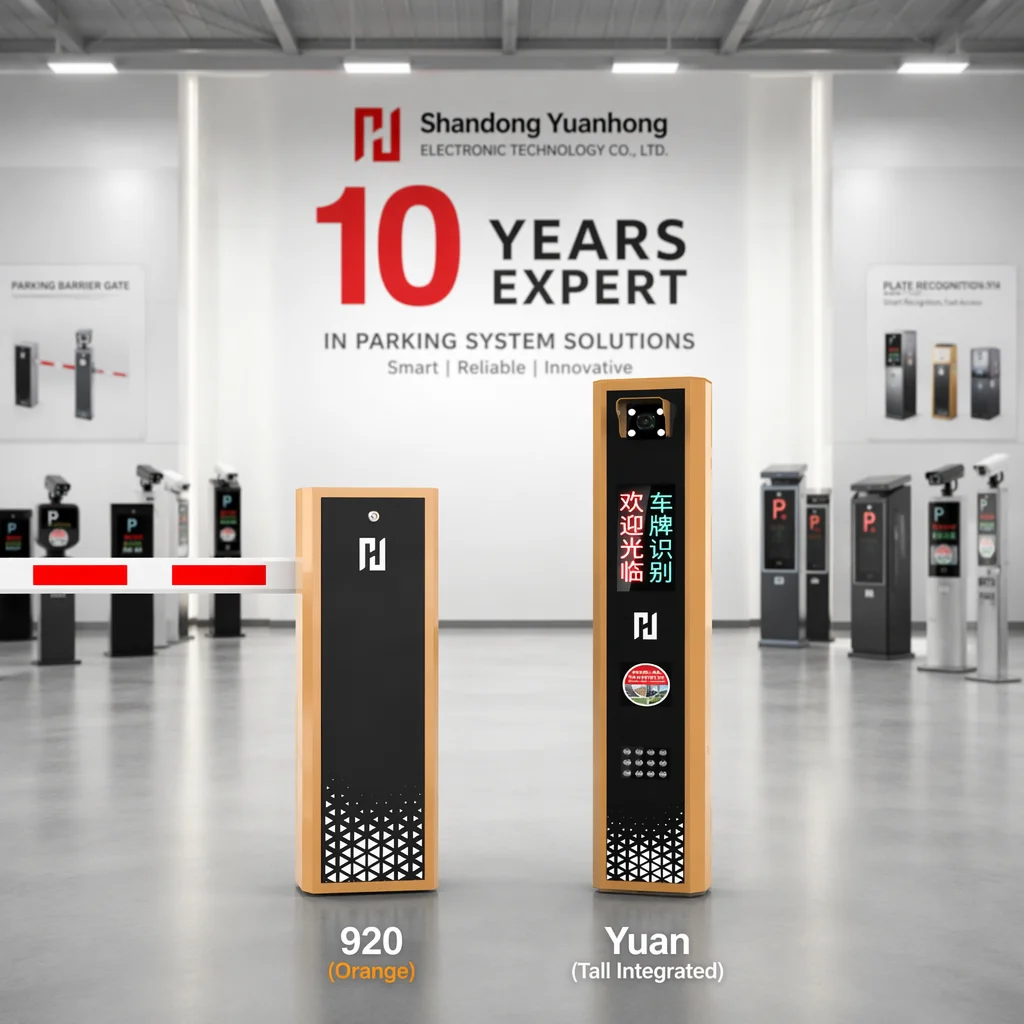
1. Start with the underground car park's clearance
Measure the lowest point along the full barrier movement envelope—not just the ceiling directly above the barrier cabinet. Check beams, sprinkler pipes, ventilation ducts, cable trays, signs, lighting, suspended services and any sloping ceiling. Record the available vertical clearance with the barrier arm both raised and lowered, including the arm's movement path and any safety margin required by the project designer.
Also confirm the maximum permitted vehicle height at the ramp and entrance. The barrier arm must not become the lowest unexpected obstruction, and the installation must not interfere with emergency equipment or required vehicle routes. If clearance varies along the lane, use the most restrictive point as the design reference.
2. Consider a folding-arm barrier for low ceilings
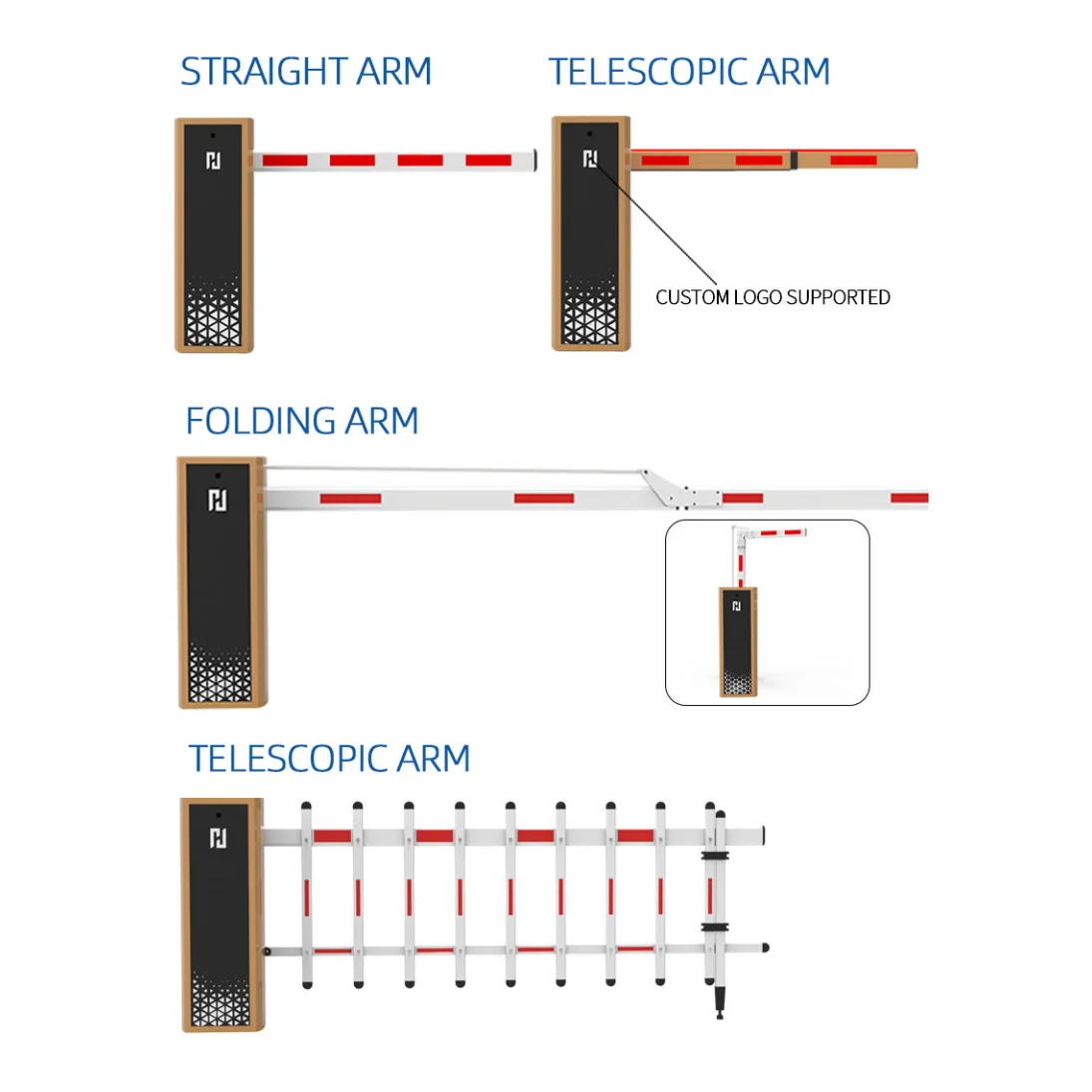
A folding-arm or articulated boom barrier is often worth evaluating where a conventional straight arm cannot rise vertically without hitting the ceiling or services. The arm folds at a joint as it opens, reducing the height required for its movement. BAROXON lists folding-arm configurations for underground basement parking and restricted-height access areas; confirm the folding geometry and dimensions for the exact model and arm length.
Do not select a folding arm based on the product name alone. Ask the supplier for a dimensioned drawing showing the arm in fully open and closed positions, the hinge location, the cabinet height, the arm length and the required clearance. Check whether the design suits the actual lane width and whether the arm can be balanced and serviced within the available space.
3. Match the barrier to the lane width and traffic flow
Measure the usable lane width between kerbs, walls, columns and protective barriers. Check the turning path of cars and larger vehicles, the position of ticket or access terminals, and whether drivers need to stop on a ramp. A long arm can increase mechanical load and may require a different drive configuration, so the supplier should confirm the permitted arm length and balance arrangement for the selected model.
Map traffic by time of day. A residential basement may have short morning and evening peaks, while an office tower, shopping centre or mixed-use development may experience concentrated arrival and departure periods. Specify the expected operations per hour and per day, not only a headline opening speed. Select a duty rating that matches the real traffic pattern and the site's ambient conditions.
4. Choose a suitable motor and operating speed
Underground car parks are often sensitive to noise, vibration and vehicle queues. Compare the available drive options—such as DC brushless, AC or servo configurations where offered—against the required duty cycle, noise level, speed control, maintenance plan and controller features. A faster barrier is not automatically the better choice if vehicles must pause for recognition, payment or a pedestrian crossing.
Ask the manufacturer to state the tested opening and closing times for the exact arm length and configuration. Confirm whether the published speed changes with the arm type, ambient temperature, controller settings or safety requirements. Avoid designing the lane around a best-case speed that has not been validated for the selected installation.
5. Plan vehicle access control: ANPR/LPR, RFID, QR or cards
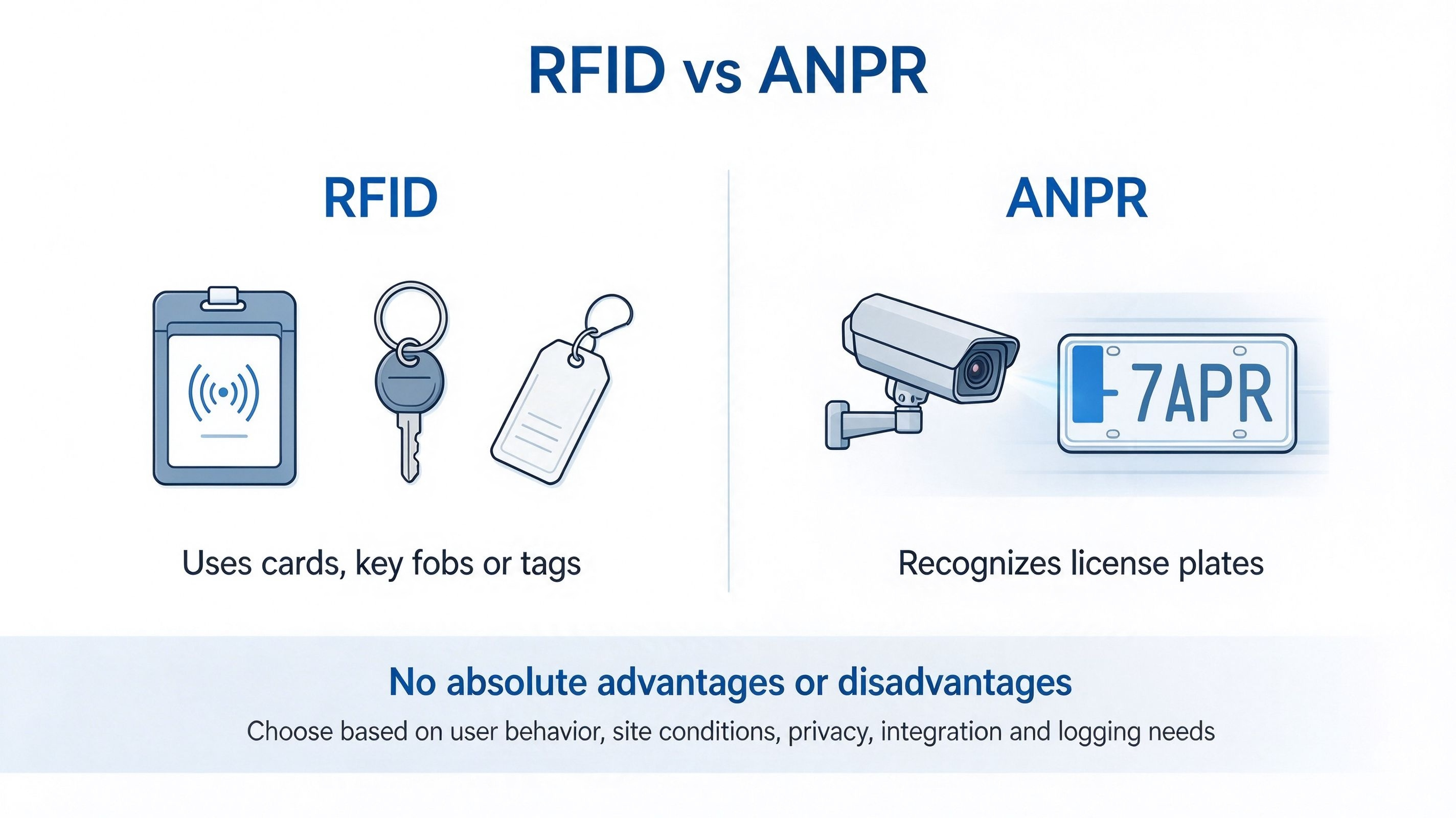
Choose the access method according to how the car park is operated. ALPR/ANPR/LPR reads the vehicle registration plate and can support ticketless entry when integrated with suitable parking software. RFID can suit registered residents, tenants or fleet vehicles. Cards, QR credentials, intercoms and attendant release may be useful for visitors, contractors and exceptions. BAROXON's product range includes LPR systems, RFID barrier options and parking-management solutions, subject to model and software compatibility.
For ALPR, check camera placement, lighting, plate format support, network reliability and what happens when a plate cannot be read. For RFID, confirm tag type, reader range and how vehicles are registered. For paid parking, confirm the complete sequence from entry recognition through parking-session creation, payment and exit authorisation. The barrier should open only after the configured access rules are satisfied.
6. Design safety protection for ramps and confined lanes
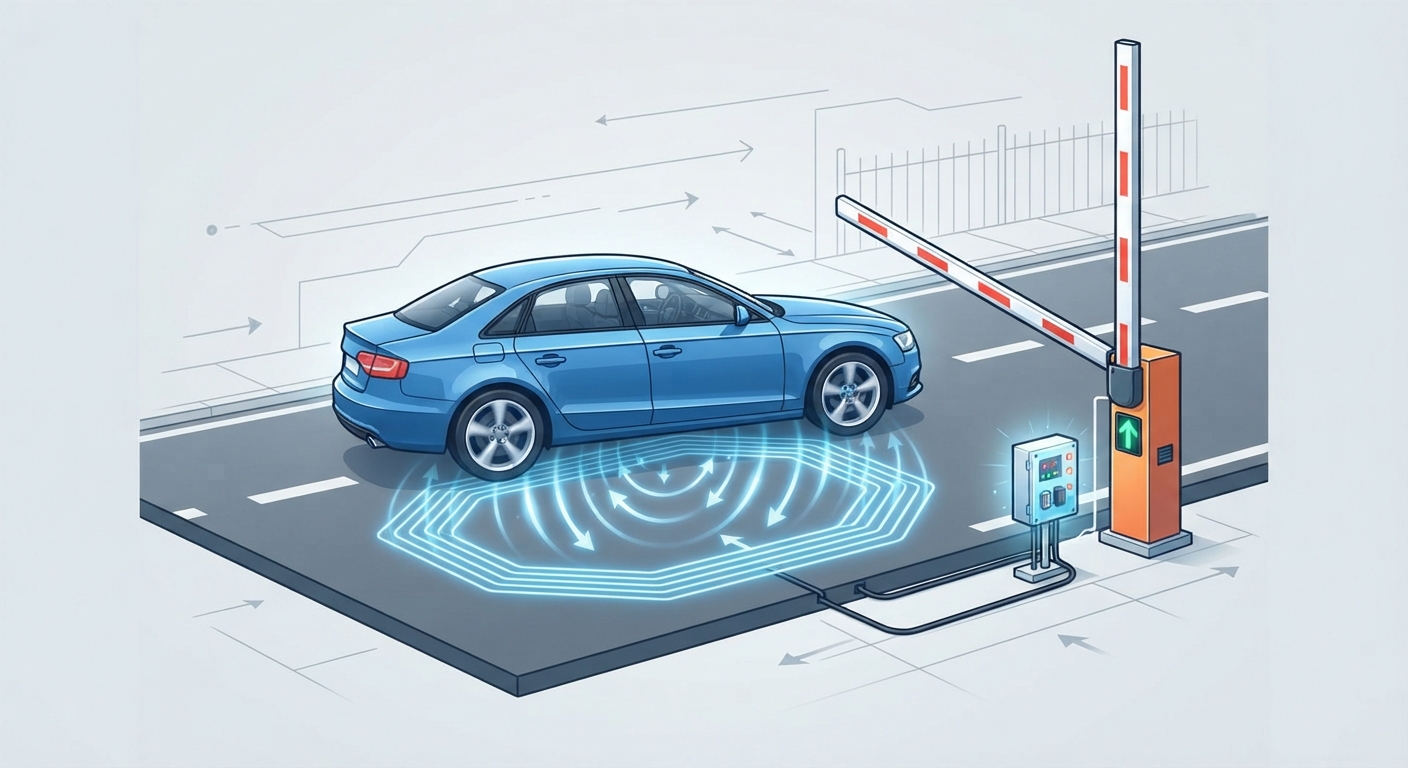
Safety must be designed into the complete lane. Confirm the barrier controller's supported safety inputs and specify suitable vehicle-presence detection, such as an induction loop, photoelectric sensor, radar or another approved device. The system must prevent the arm from closing onto a vehicle that is still beneath it and should account for tailgating, motorcycles where permitted, and vehicles stopping on a slope.
Keep pedestrian routes separate from the vehicle barrier wherever possible. If pedestrians can cross the arm's movement area, assess the risk and provide suitable physical separation, signage and detection. Ensure the barrier does not obstruct emergency access, accessible routes or the operation of fire and life-safety systems. Have the design reviewed by the responsible project and fire-safety professionals.
7. Check power-loss behaviour and emergency release
Ask what the barrier does during a mains power failure, controller fault or fire-alarm event. Confirm whether a fail-safe lifting function is available for the chosen configuration and how it behaves under the site's requirements. Staff should know how to use the manual release, and the procedure should be tested and documented before the car park opens.
Do not assume that a vehicle barrier alone satisfies emergency-egress requirements. Coordinate the barrier sequence, fire-alarm interface, access-control software and any required emergency override with the project's fire consultant and relevant authorities. The final fail-safe state must be defined for the actual building and approved operating procedure.
8. Account for the underground environment
A basement may be sheltered from direct sunlight but can still experience dust, humidity, water ingress, condensation, vehicle exhaust, cleaning chemicals and wash-down water. Check the installation area for drainage and possible flooding, and verify the enclosure's protection rating and permitted environmental conditions for the exact barrier model. Do not assume every model has the same IP rating.
Specify cable routes, conduit protection, earthing, electrical isolation and access for maintenance. Keep the cabinet clear of vehicle impact zones and ensure technicians can reach the controller without standing in live traffic. Where the entrance connects to an outdoor ramp, assess the transition between the basement environment and Saudi heat, dust and glare.
9. Allow space for installation and maintenance
A compact entrance can leave too little room to open the barrier cabinet, remove the arm, access fasteners or replace components. Include the manufacturer's service clearances in the layout drawing. Confirm the direction of the arm, cabinet handing, foundation or mounting requirements, cable entry and the space needed for tools and safe maintenance.
Ask for installation instructions, wiring diagrams, spare-parts availability, recommended inspection intervals and a clear warranty process. For multi-site operators, standardising barrier models and control procedures can simplify staff training, spares management and fault reporting.
10. Compare total cost of ownership, not just purchase price
Compare the full installed cost: barrier unit and arm, safety sensors, access-control readers or cameras, software licences, network equipment, civil and electrical works, commissioning, training, spare parts and planned maintenance. A low initial price may not represent the best value if the arm design is unsuitable for the ceiling, the duty rating is too low or interface work has been excluded.
Request a written quotation that identifies the exact model, arm type and length, motor, controller, safety inputs, access-control interface, environmental rating, warranty, delivery scope and exclusions. Ask the supplier to state any assumptions about site dimensions and traffic volume so that the final proposal can be checked against the survey.
11. Practical selection checklist
Before approving a model, confirm: (1) the lowest overhead clearance and arm movement envelope; (2) lane width and permitted vehicle height; (3) straight or folding arm suitability; (4) traffic volume and duty cycle; (5) motor and speed configuration; (6) safety sensors and anti-collision behaviour; (7) emergency release and power-loss behaviour; (8) ANPR, RFID, QR or card integration; (9) environmental protection and drainage; (10) installation and service clearance; and (11) warranty, spare parts and commissioning scope.
Ask the supplier to provide a dimensioned drawing, technical datasheet, wiring/interface diagram, safety-device list, installation manual and commissioning test sheet for the exact configuration. Where the basement entrance is complex, arrange a joint review involving the parking operator, MEP contractor, access-control integrator and fire-safety consultant before the equipment is ordered. For the wider procurement sequence, see the boom barrier gate buying guide for Saudi projects and the access control standards for Saudi parking facilities.
Frequently asked questions
Is a folding-arm barrier best for every underground car park?
No. It is particularly useful where the available headroom prevents a straight arm from opening normally, but the final choice depends on the measured clearance, lane width, traffic duty and the exact folding geometry. A site drawing and model-specific dimensions should determine the decision.
Can an underground parking barrier work with ANPR or LPR?
Yes, where the selected barrier, camera and parking-management software have compatible interfaces. Confirm plate-format support, camera placement, access rules, exception handling and the complete entry/exit workflow before installation.
Should the barrier open quickly to prevent queues on a ramp?
Speed is only one part of queue management. Review traffic arrival rates, stopping position, access verification time, payment or visitor procedures and available queue storage. Select a speed that suits the barrier configuration and safety requirements rather than choosing the fastest published figure.
What safety devices are needed?
The required devices depend on the barrier model, lane layout and risk assessment. Common considerations include vehicle-presence detection, obstruction protection, photoelectric sensors where appropriate, clear signs and a tested manual or emergency release procedure. Confirm the final design with the responsible professionals.
What should Saudi facility managers check before buying?
Confirm exact model specifications, environmental limits, safety functions, emergency operation, interface compatibility, installation scope, spare-parts support and warranty terms. For underground sites, measured clearance and service access are especially important; do not rely on catalogue images alone.
Conclusion
The best parking barrier for an underground car park is the one that fits the real clearance, lane geometry and traffic demand while maintaining safe vehicle movement and practical maintenance access. A folding-arm barrier may solve a low-ceiling constraint, while a suitable motor and duty rating can support the expected traffic. Integrate ANPR/LPR, RFID or other access methods only after confirming interfaces, safety logic and the full operating workflow.
BAROXON offers automatic boom barrier gates, folding-arm options, ALPR/LPR systems and parking access-control solutions. Share the measured headroom, lane width, maximum vehicle height, estimated daily operations and preferred access method when requesting a configuration for a Saudi underground car park.
Latest News
Straight vs Folding Boom Barrier Arms
Straight arm or folding arm boom barrier? How overhead clearance, lane width, traffic and maintenance decide which arm configuration suits a site.
2026-10-28
Parking Barriers for Underground Car Parks
How to choose a barrier for an underground car park: headroom, folding-arm geometry, traffic duty, safety sensors and access-control options.
2026-10-28
RFID vs ANPR: Choosing a Parking System
RFID or ANPR for vehicle access? How each identifies a vehicle, where each fits, what to compare on cost, and when to combine both methods.
2026-10-28
Questions to Ask a Barrier Supplier
The questions to ask a barrier supplier before buying: exact model, lane suitability, safety devices, integration, warranty and the total quoted price.
2026-10-28
Comparing Parking Barrier Manufacturers
How to compare parking barrier manufacturers and suppliers: specifications, environmental suitability, integration, support and total cost of ownership.
2026-10-28
Parking Barrier Project Planning Checklist
A practical checklist for planning a parking barrier project: site survey, lane geometry, equipment selection, safety, interfaces and acceptance testing.
2026-10-28
Baroxon® | Leading Boom Barrier Manufacturer
Advanced Security Access Control and Intelligent Parking Solutions.
Company Strength
Adequate Inventory
Fast Shipping
Our Products
CONTACT US
Address: No. 2 Wanshou Road, International Innovation Industrial Park, Jinan, Shandong, China






© COPYRIGHT 2025 Baroxon® | Leading Boom Barrier Manufacturer

Contact Us
Our passion is to bring your ideas to life. Work with our design team to create a one-of-a-kind custom finish or cladding system to create a truly unique space. Together we can make your story stand out. If you need something to request a sample, request pricing, or request a demo, please fill out the contact form below. Explain your request in as much detail as you can and a representative will contact you within 1 business day.