Baroxon® | Leading Boom Barrier Manufacturer

RFID vs ANPR: Choosing a Parking System
Release time:
2026-10-28
RFID and ANPR both identify a vehicle before a barrier opens, but they solve different problems. This comparison sets out how each works, where each fits and how to decide between them for a given site.
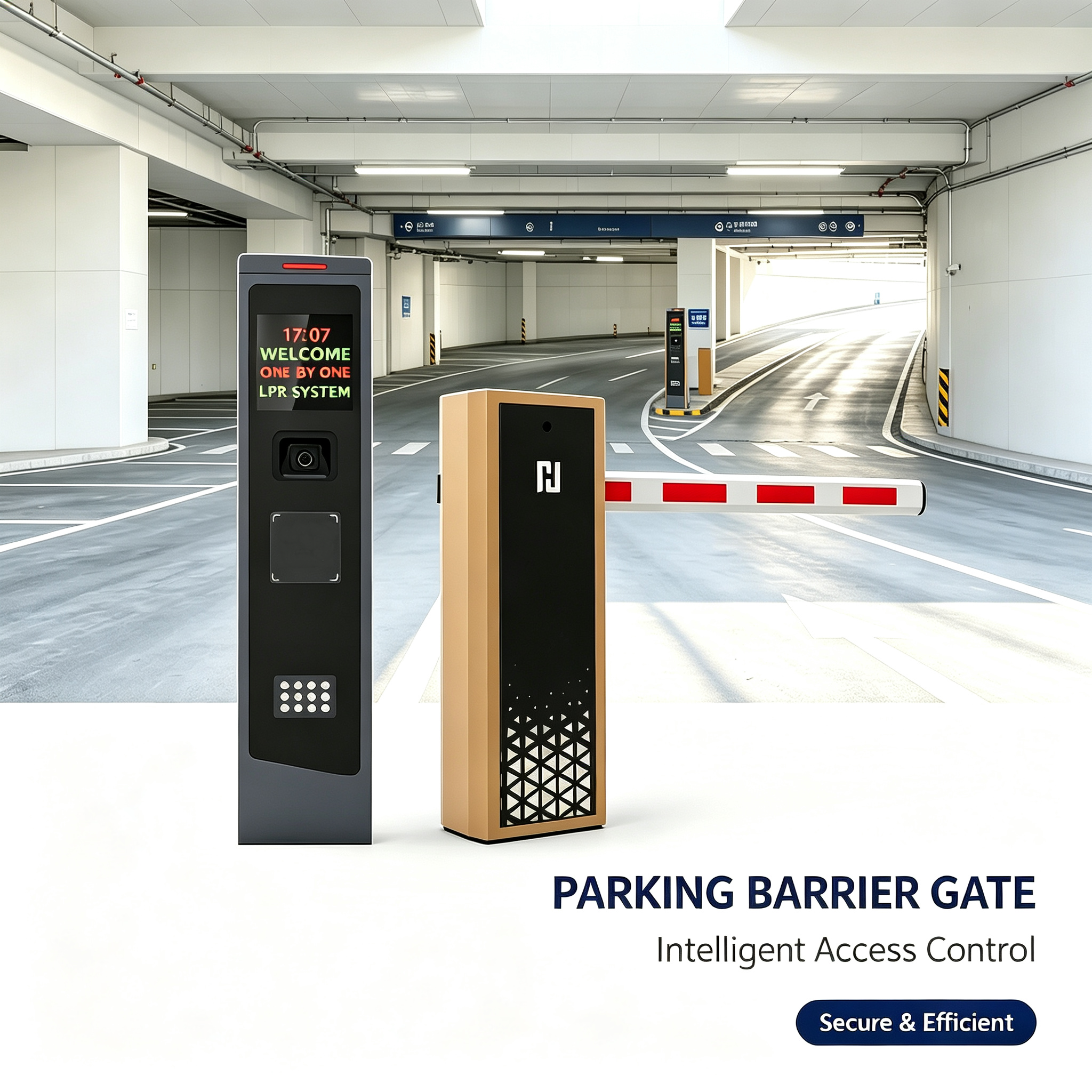
1. What Is an RFID Parking System?
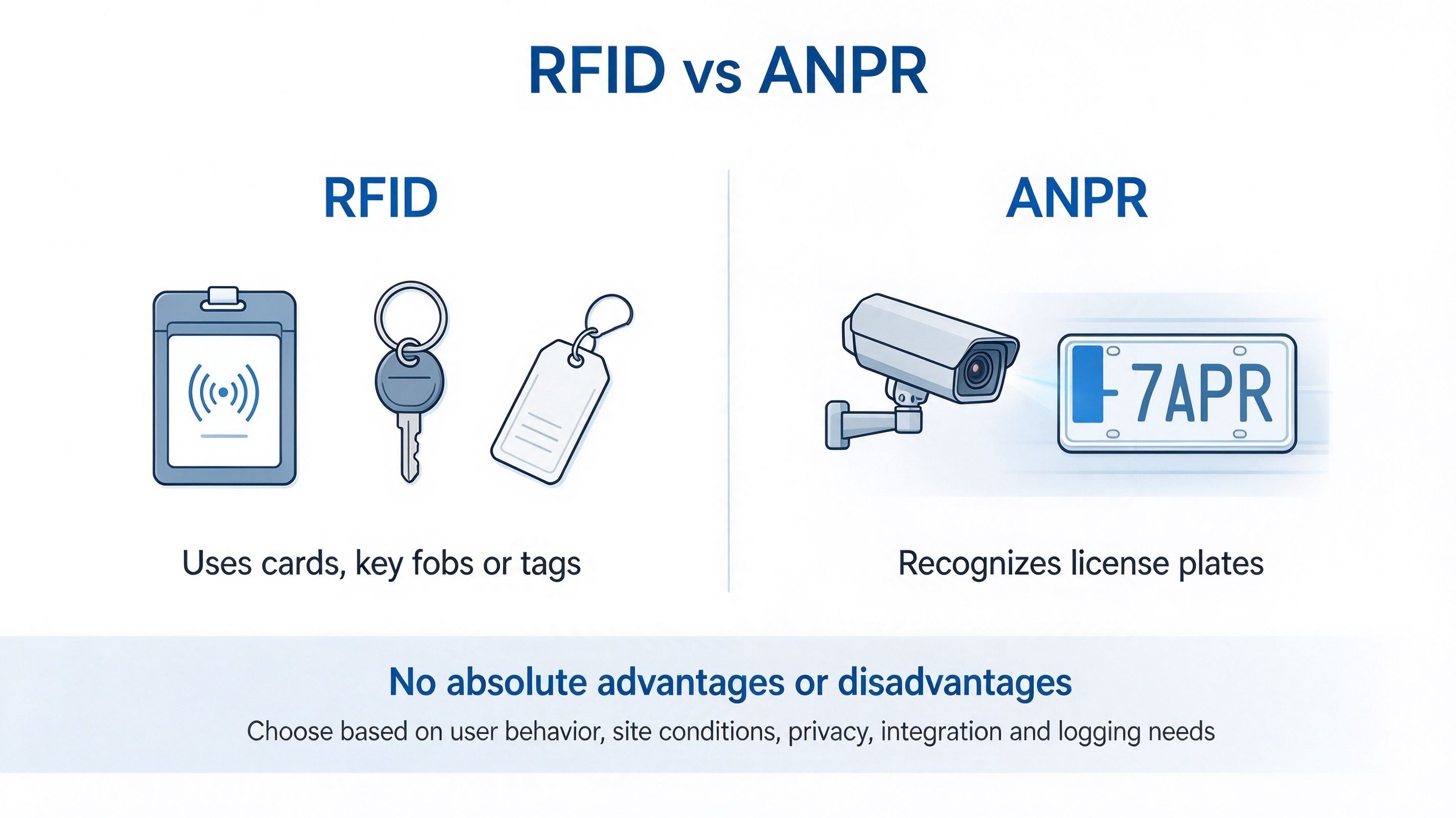
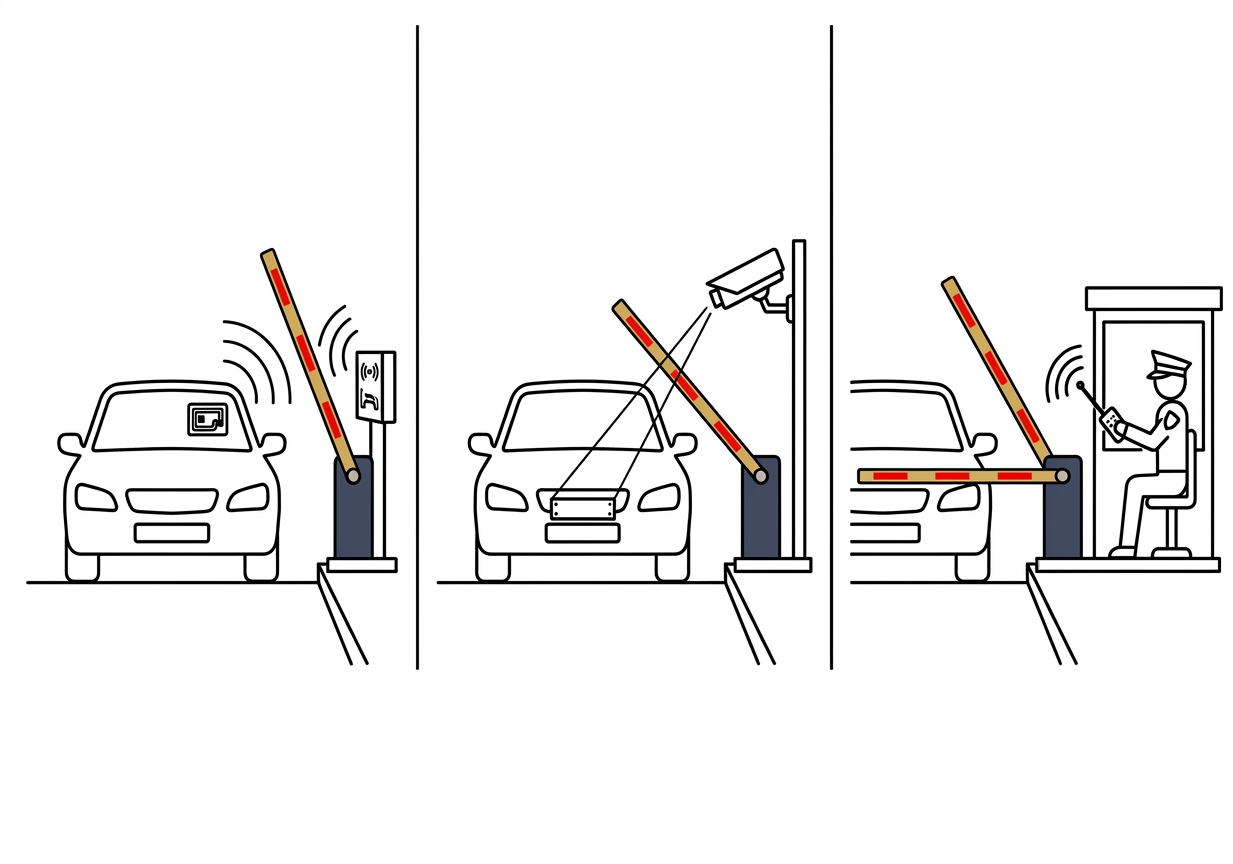
RFID stands for Radio Frequency Identification. In a vehicle access system, an RFID reader detects a compatible credential - such as a windshield tag, vehicle-mounted tag or access card - and checks its identifier against the permissions stored in the access-control software. If the credential is valid and the access rules allow entry, the controller sends an open command to the automatic boom barrier.
RFID can be configured for short-range card presentation or longer-range vehicle identification. A UHF long-range reader with a correctly installed vehicle tag can identify an enrolled vehicle without requiring the driver to lower the window and present a card at the reader. Actual reading distance depends on the reader, antenna position, tag type, vehicle windscreen, lane geometry and site conditions, so it should be tested at the intended entrance.
2. What Is an ANPR Parking System?
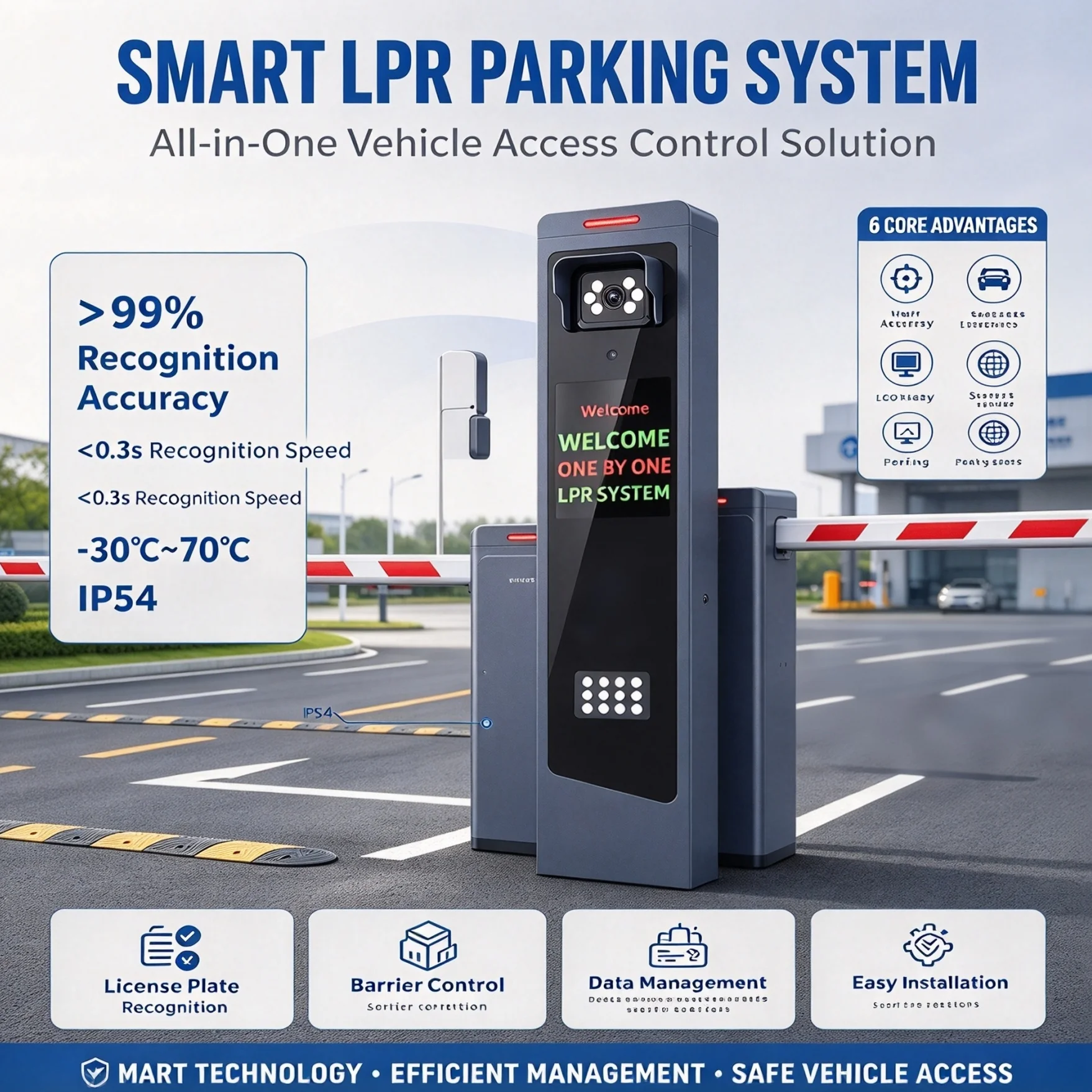
ANPR means Automatic Number Plate Recognition. It is also commonly called LPR (License Plate Recognition) or ALPR (Automatic License Plate Recognition). A camera captures an image of an approaching vehicle's number plate, and recognition software converts the plate characters into data. The parking system then compares the recognised plate with an authorised list, a visitor booking, a payment record or another access rule before triggering the boom barrier.
The main operational benefit is that a driver may not need to carry or present a separate access tag. Registered residents, staff or fleet vehicles can be authorised by their plate, while visitor vehicles can be handled through a pre-registration process or a staffed exception workflow. Recognition performance is not guaranteed in every condition: camera angle, distance, exposure, headlights, dirt, plate condition, vehicle speed and the supported plate formats all affect results.
3. RFID vs ANPR: The Main Differences
| Comparison point | RFID parking system | ANPR parking system |
|---|---|---|
| What it identifies | A tag or card credential | The vehicle registration plate |
| Driver credential | A compatible tag/card must be issued and maintained | A readable, supported plate is normally sufficient for plate-based authorisation |
| Typical user groups | Residents, employees, fleet vehicles and pre-enrolled vehicles | Residents, employees, visitors, public parking users and fleets, depending on the workflow |
| Recognition dependency | Reader, antenna, tag and installation | Camera, lighting, plate visibility, software and supported plate formats |
| Visitor handling | Issue a temporary card/tag or use a separate visitor process | Register the plate in advance, use a visitor workflow or route uncertain reads to an attendant |
| Best-fit scenarios | Frequent repeat traffic and controlled vehicle lists | Ticketless entry, visitor-friendly access and plate-based parking records |
| Main operational task | Issue, replace, revoke and manage credentials | Maintain plate records, camera settings, recognition rules and exception handling |
| Privacy consideration | Credential identifiers and access logs need protection | Plate images, recognised plates and access logs need protection |
| Barrier integration | Reader output or access controller triggers the barrier after authorisation | Recognition software or controller sends an authorised open command to the barrier |
| Can they be combined? | Yes | Yes |
4. Which System Is Better for Saudi Arabia?
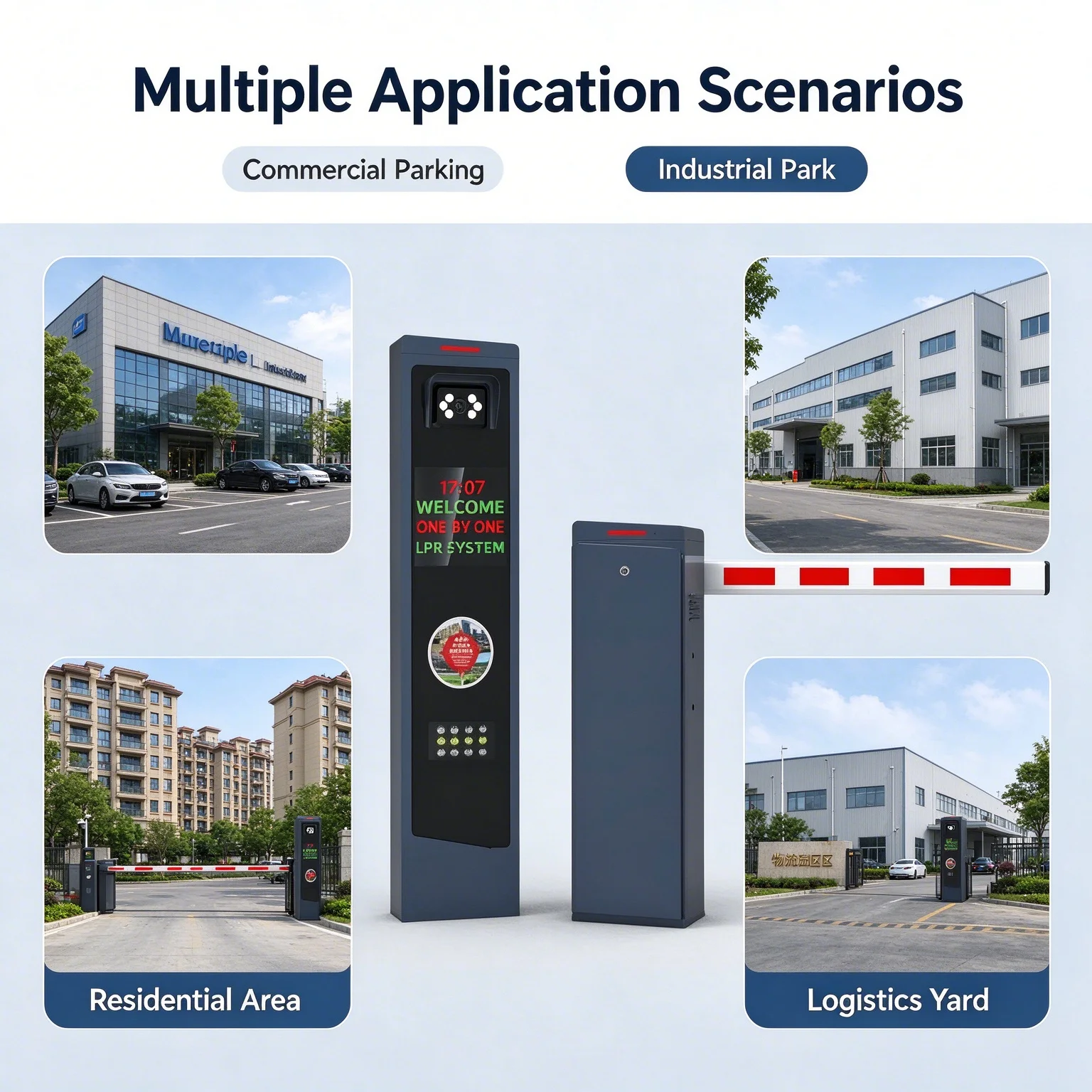
There is no single winner for every Saudi site. For a residential compound or staff car park with a stable list of regular vehicles, RFID can provide predictable access with long-range UHF tags. For a shopping centre, hotel, visitor car park or mixed-use commercial property, ANPR may offer a smoother visitor experience because authorisation can be based on the vehicle plate rather than a permanent tag. For logistics parks and industrial facilities, RFID is often useful for enrolled fleet vehicles, while ANPR can provide an additional visual vehicle record or support visitor handling.
Saudi operating conditions should be part of the specification. Outdoor lanes may be exposed to strong sunlight, high temperatures, dust and wind-blown debris. For ANPR, confirm that the selected camera can handle the site's lighting, plate formats and night-time conditions, and test both entry and exit lanes. For RFID, confirm the reader's outdoor rating, mounting position, tag performance through the vehicle windscreen and the required read distance. For the boom barrier, check the exact model's temperature range, ingress-protection rating, arm length, wind exposure and duty cycle rather than assuming that every model has the same rating.
5. Cost: What Should You Compare?
Compare the total installed and operating cost, not just the price of the reader or camera. An RFID solution may require tags or cards, reader antennas, enrolment administration and replacement credentials. An ANPR solution may require suitable cameras, mounting poles, lighting, recognition software, network capacity, plate enrolment and ongoing software support. Both options may need a boom barrier, vehicle detector, safety devices, access-control software, cabling, commissioning and integration with an existing parking platform.
Ask suppliers to quote the complete lane configuration and clearly list optional items. Confirm whether the quoted system includes software licences, visitor management, reporting, anti-passback rules, remote support, spare parts and warranty coverage. Request a demonstration using representative vehicles and real site conditions before approving a large deployment.
6. Security, Safety and Data Protection
Neither RFID nor ANPR should be treated as the only security layer. Use a clear authorisation policy, revoke lost or expired credentials promptly, restrict administrator access and keep an auditable record of access changes. For ANPR, define who can view plate images and recognised plate data, how long records are retained, and how authorised requests for access or deletion are handled under the organisation's applicable policies and Saudi requirements.
The boom barrier must also operate safely. Confirm vehicle-presence detection, anti-crush or auto-reverse functions where provided, emergency release procedures and safe behaviour during a power or network failure. A recognition failure should lead to a controlled exception process - not an unsafe barrier movement or an automatic assumption that every vehicle is authorised. Test tailgating scenarios, motorcycles if relevant, emergency vehicles and manual override before handover.
7. Can RFID and ANPR Work Together?
Yes. A combined system can use RFID as the primary credential for residents, employees or registered fleet vehicles and ANPR as a second identification method, a visitor workflow or an exception-verification layer. The access-control platform should define how the methods interact: for example, whether either valid credential is enough, whether both are required for selected high-security lanes, and how mismatched tag and plate records are handled.
A practical example is a gated residential compound: residents use registered long-range RFID tags for routine entry, while visitor vehicles are pre-registered by plate and verified by ANPR. A security officer can review uncertain reads, and the barrier opens only after the access rules and vehicle-safety inputs permit it. For a logistics yard, RFID may identify fleet vehicles while ANPR provides a visual record and helps investigate disputed arrivals or departures.
8. How to Select the Right BAROXON Configuration
Start with the operating requirement, then select the identification method and barrier model. BAROXON's Saudi site lists both an automatic RFID boom barrier range and ALPR/LPR camera products, alongside standard and high-speed boom barrier gates. Before specifying a system, confirm lane width, traffic per hour, vehicle mix, indoor or outdoor installation, required reading distance, supported interfaces and the exact barrier's duty cycle and environmental ratings.
Ask the integrator to provide a lane diagram, equipment schedule, interface list, failure-mode plan and acceptance-test checklist. The final proposal should identify which components are included, how the barrier receives an authorised open command, what happens when recognition fails, and how the system records entry and exit events. Product ratings and performance figures vary by model; obtain the relevant datasheet for the exact configuration.
9. Frequently Asked Questions
Is RFID better than ANPR for a residential compound?
RFID is often a strong choice when most vehicles are regular residents or staff and tags can be managed reliably. ANPR can be more convenient for visitors and for sites that prefer plate-based authorisation. A combined design may be suitable when the site needs both quick resident access and flexible visitor management.
Does ANPR require a tag inside the vehicle?
No separate RFID tag is required for plate-based ANPR authorisation, but the vehicle must display a plate the camera can capture and the software can recognise. Site lighting, camera setup, plate condition and the supported plate formats affect reliability.
Can an RFID reader open an automatic boom barrier?
Yes, when the reader, access controller and barrier control board have compatible interfaces and the access rules authorise the credential. The installation should also include suitable vehicle detection and safety devices.
Can one parking system support both RFID and ANPR?
Yes, provided the parking or access-control software supports both inputs and the integrator configures clear rules for authorisation, visitor access, exception handling and event logging. Confirm interface compatibility with the exact products before ordering.
Which option is more suitable for a logistics park?
Long-range UHF RFID is useful for registered fleet vehicles that need repeat access, while ANPR can add plate-based records and help manage visitors or exceptions. The best design depends on truck flow, vehicle types, the required read distance and the site's security policy.
Conclusion
RFID and ANPR solve related but different vehicle-identification problems. RFID verifies a credential; ANPR recognises a number plate. Choose RFID for well-managed, repeat users, ANPR for plate-based and visitor-friendly workflows, or combine both when the site benefits from multiple ways to identify a vehicle. For a Saudi parking or industrial entrance, evaluate the complete system - including the boom barrier, reader or camera, safety devices, software, environmental rating and support - rather than selecting by reader price alone.
Explore BAROXON's automatic RFID boom barrier range, boom barrier gates and ALPR/LPR parking products to plan a configuration that fits the site.
Latest News
Straight vs Folding Boom Barrier Arms
Straight arm or folding arm boom barrier? How overhead clearance, lane width, traffic and maintenance decide which arm configuration suits a site.
2026-10-28
Parking Barriers for Underground Car Parks
How to choose a barrier for an underground car park: headroom, folding-arm geometry, traffic duty, safety sensors and access-control options.
2026-10-28
RFID vs ANPR: Choosing a Parking System
RFID or ANPR for vehicle access? How each identifies a vehicle, where each fits, what to compare on cost, and when to combine both methods.
2026-10-28
Questions to Ask a Barrier Supplier
The questions to ask a barrier supplier before buying: exact model, lane suitability, safety devices, integration, warranty and the total quoted price.
2026-10-28
Comparing Parking Barrier Manufacturers
How to compare parking barrier manufacturers and suppliers: specifications, environmental suitability, integration, support and total cost of ownership.
2026-10-28
Parking Barrier Project Planning Checklist
A practical checklist for planning a parking barrier project: site survey, lane geometry, equipment selection, safety, interfaces and acceptance testing.
2026-10-28
Baroxon® | Leading Boom Barrier Manufacturer
Advanced Security Access Control and Intelligent Parking Solutions.
Company Strength
Adequate Inventory
Fast Shipping
Our Products
CONTACT US
Address: No. 2 Wanshou Road, International Innovation Industrial Park, Jinan, Shandong, China






© COPYRIGHT 2025 Baroxon® | Leading Boom Barrier Manufacturer

Contact Us
Our passion is to bring your ideas to life. Work with our design team to create a one-of-a-kind custom finish or cladding system to create a truly unique space. Together we can make your story stand out. If you need something to request a sample, request pricing, or request a demo, please fill out the contact form below. Explain your request in as much detail as you can and a representative will contact you within 1 business day.