Baroxon® | Leading Boom Barrier Manufacturer

Smart Parking Access Control: A Complete Guide
Release time:
2026-10-28
A smart parking access control system decides which vehicles may enter and records what happened, using a barrier, an identification method and management software. This guide explains the components and the decisions that determine whether an entrance works in practice.
For Saudi Arabia, smart parking access control can be useful at residential compounds, office towers, shopping centres, hotels, hospitals, logistics parks, industrial facilities and public-sector sites. The right configuration depends on traffic volume, security policy, visitor procedures, lane layout, operating environment and the systems already installed at the site.
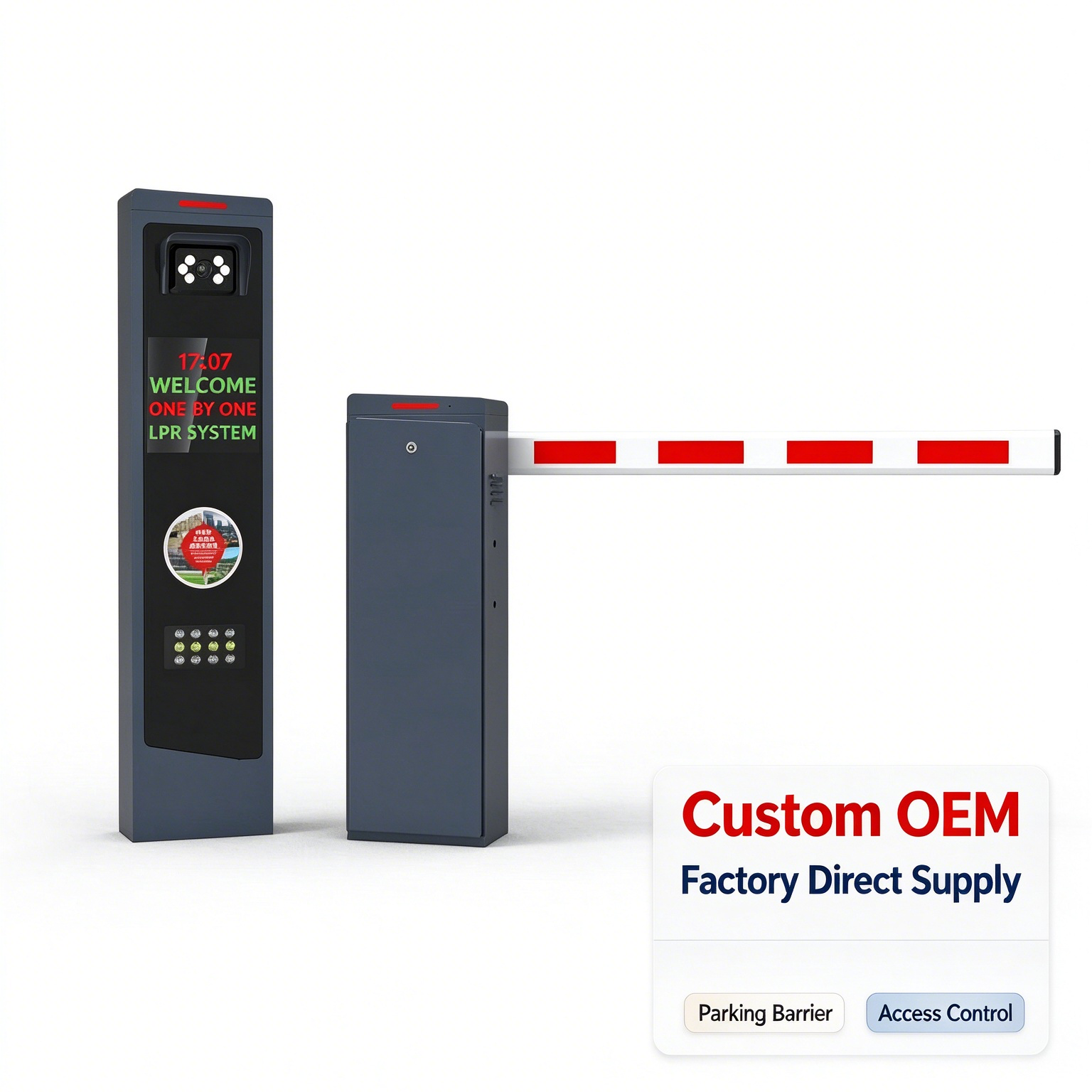
1. What Does a Smart Parking Access Control System Include?
A complete solution is usually built from several components. Not every site needs every component; the equipment should be selected to match the access policy and the site's operating needs.
Automatic boom barrier gate
The boom barrier is the physical vehicle-control point. The controller raises the arm after receiving an authorised command and lowers it when the vehicle has passed and the configured safety conditions are satisfied. Straight-arm, folding-arm, high-speed and heavy-duty models may suit different lane widths, traffic volumes and clearance constraints.
ANPR/LPR number plate recognition
Automatic Number Plate Recognition (ANPR), also called License Plate Recognition (LPR), uses a camera and recognition software to read a vehicle registration plate. The parking platform compares the plate with an approved list, visitor booking or other configured rule before requesting the barrier to open. Actual performance depends on camera placement, lighting, vehicle speed, plate condition, local plate formats and software settings.
RFID cards, tags and long-range readers
RFID credentials can identify authorised residents, employees, contractors or registered fleet vehicles. Depending on the reader and credential type, users may present a card or use a vehicle-mounted tag. Long-range UHF RFID can be useful at logistics entrances where registered vehicles need to be identified without repeated manual checks.
Vehicle detectors and safety sensors
Loop detectors, radar sensors, photoelectric sensors and other suitable safety devices help detect vehicle presence or obstacles. They can support safe barrier operation and reduce the risk of the arm closing onto a vehicle. Device selection and positioning should be determined by a qualified installer based on the lane layout and manufacturer's instructions.
Parking management software
The software applies access rules, manages approved plates or credentials, records vehicle movements and may provide occupancy, duration or revenue reports. Larger sites may require centralised management across several entrances or locations. Confirm whether the proposed software supports the required reporting, user permissions, integrations and data retention settings.
Visitor access, intercom and payment equipment
Visitor QR codes, intercom release, ticket dispensers, payment terminals and staffed control points can be added where the site requires them. These features are especially relevant when residents, employees, visitors, delivery drivers and paying customers use the same entrance but follow different access rules.
2. How Does the System Work?
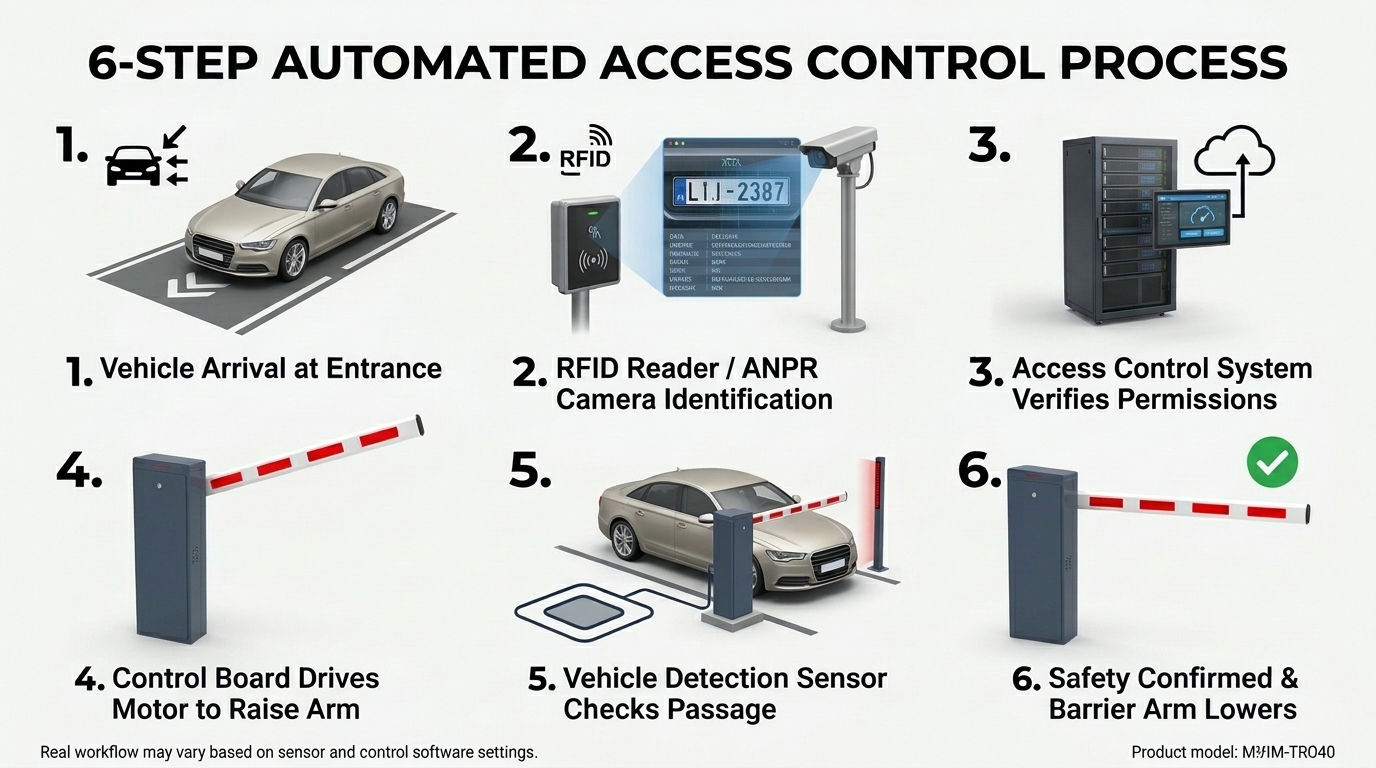
A typical smart parking access sequence follows these steps:
- Vehicle approaches the lane. Signage and lane markings guide the driver to the correct stopping position.
- The system identifies the access request. A camera reads the number plate, an RFID reader detects a tag, or the driver presents a card, QR code or ticket.
- The software checks permission. The credential is compared with the site's access rules, approved list, visitor record or payment status.
- The controller requests barrier opening. If the request is valid, the boom barrier receives an authorised open command.
- Safety devices monitor vehicle movement. Detectors and configured controls help prevent the arm from lowering while a vehicle is still in the protected area.
- The vehicle passes and the event is logged. The system records the event according to its configuration, and the barrier closes when safe conditions are met.
The exact workflow differs by project. For example, a residential compound may use resident plate whitelists and visitor intercom release, while a ticketless commercial car park may connect plate recognition with payment and occupancy management. The supplier should document the normal sequence as well as exceptions such as unreadable plates, invalid credentials, network loss and power failure.
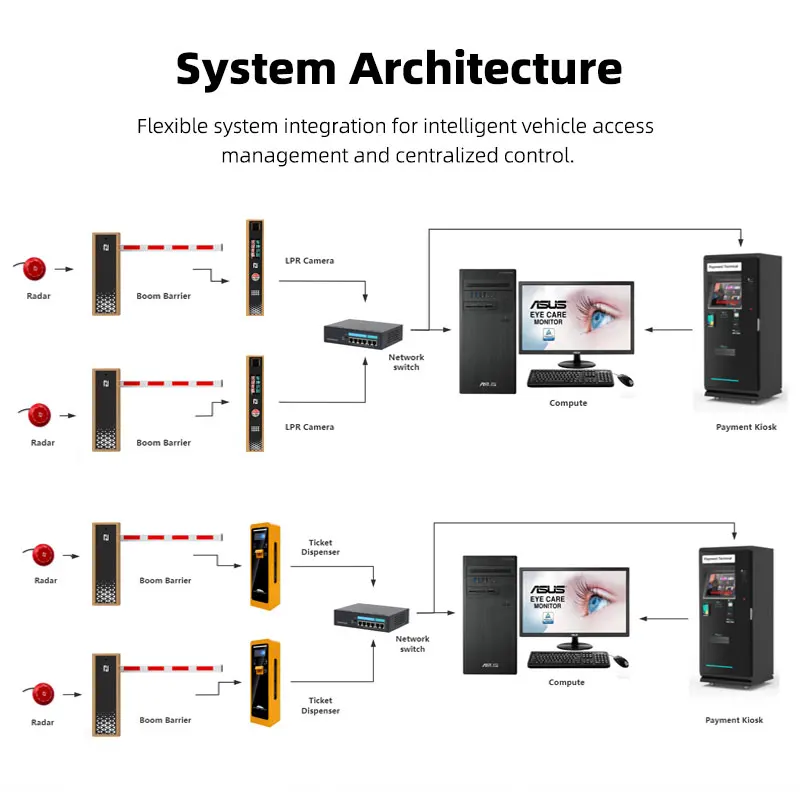
3. Main Types of Smart Parking Access Control
ANPR/LPR-based access
Number plate recognition can support ticketless entry, resident access and visitor management. It reduces the need for a driver to present a physical card, but the site still needs a procedure for unreadable plates, temporary vehicles, motorcycles where relevant, and visitors whose details are not in the approved list.
RFID-based access
RFID is often practical for regular users and registered fleets because the credential can be associated with an account or vehicle record. The read range, tag type, installation position and vehicle speed should be tested on site. RFID alone does not identify every vehicle automatically unless the appropriate credential is present and assigned.
Card, QR code or ticket-based access
Card readers, QR codes and ticket systems can suit sites with occasional visitors, paid parking or a staffed reception. These methods can also work alongside ANPR/LPR or RFID rather than replacing them. Choose the process that is easiest for the actual users while remaining manageable for security staff.
Hybrid access control
A hybrid system uses more than one access method - for example, ANPR for registered residents, QR codes for visitors and an intercom for exceptions. This can improve flexibility, but it also introduces more rules and integrations to maintain. Define which method takes priority if two systems return conflicting results.
4. Benefits for Saudi Car Parks and Facilities
More consistent vehicle access
Automated checks apply configured rules in a repeatable way and reduce the need for staff to make every routine decision manually. The system should still provide a clear exception process for visitors, emergency vehicles and failed credentials.
Better visibility of entry and exit activity
A correctly configured platform can maintain searchable event records and provide reports on vehicle movements. This helps authorised managers investigate incidents and review site operations. Access to records should be limited to appropriate personnel.
Support for busy entrances
High-speed barrier options and automated credential checks can help manage queues at busy entrances. Actual throughput depends on the barrier's cycle time, lane geometry, recognition performance, vehicle spacing, payment steps and peak-hour demand; no single component guarantees a queue-free entrance.
Integration with wider security systems
Where technically supported, parking access can be coordinated with a site's existing access-control platform, security desk, visitor management process or central monitoring system. Confirm interface compatibility, permissions and ownership of system maintenance before installation.
Flexible operation for different site types
The same general architecture can be configured for a residential compound, commercial car park, logistics gate or office building, but the credential rules, lane hardware and reporting needs will differ. A site survey is essential before finalising the bill of materials.
5. Choosing a System for Saudi Arabia's Environment
Outdoor equipment in Saudi Arabia may be exposed to high temperatures, direct sunlight, dust and, in coastal locations, humid or saline air. Do not rely on a general "outdoor" label alone. Check the selected model's specified operating-temperature range, ingress-protection rating, installation limits and maintenance requirements.
Before procurement, evaluate:
- Lane width and layout: confirm the clear opening, vehicle stopping point, pedestrian routes and space for the barrier arm.
- Traffic volume and cycle rate: estimate normal and peak-hour movements, including daily cycles.
- Recognition conditions: check camera angle, lighting, plate visibility and vehicle speed for ANPR/LPR; test read range and tag placement for RFID.
- Environmental rating: verify the exact model's IP rating and permitted temperature range rather than assuming all products share the same rating.
- Safety devices: specify suitable loop detectors, radar or photoelectric sensors, anti-crush behaviour and manual release.
- Power and connectivity: confirm power availability, network reliability, communication interfaces and any backup requirements.
- Software and integrations: check compatibility with existing systems, reporting needs, user permissions and support arrangements.
- Maintenance and lifecycle cost: consider spare parts, service access, training, inspection frequency and expected operating cycles.
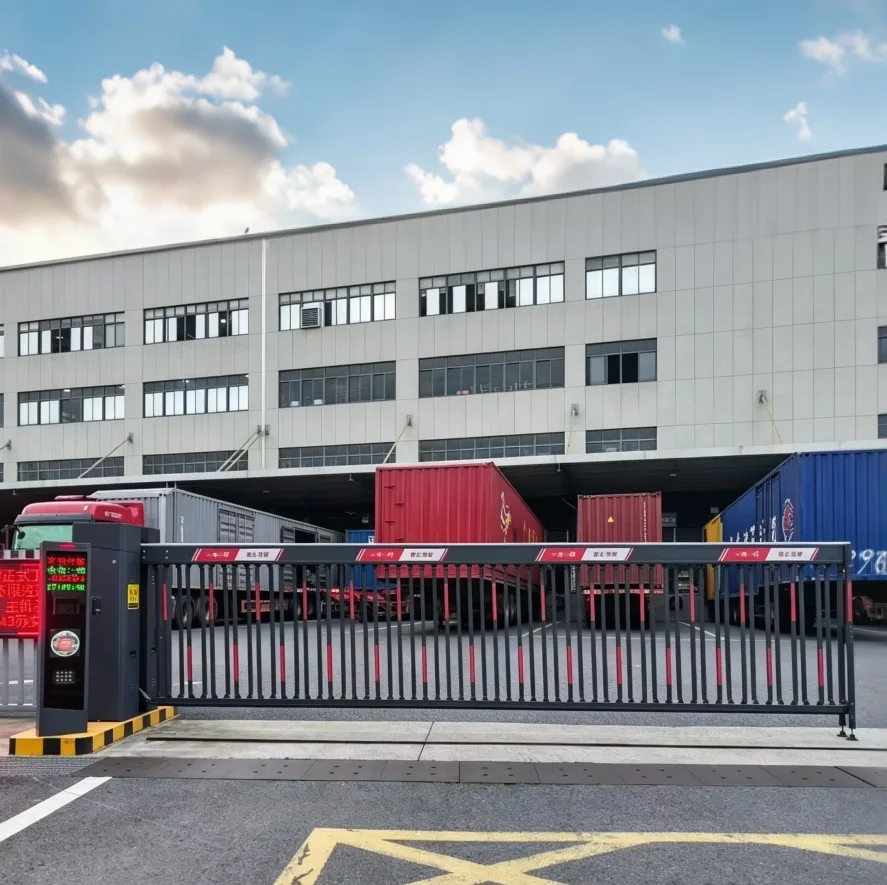
6. Safety, Emergency Access and Data Governance
Vehicle access control must not obstruct emergency response. Before commissioning, document how emergency vehicles gain access, how the lane is released during a power or network failure, who can operate manual release, and how the barrier responds to the site's fire and emergency procedures. Confirm the plan with the project's responsible safety professionals and applicable local requirements.
Install and test vehicle detection and obstacle protection in accordance with the manufacturer's instructions. Mark the stopping line clearly and consider pedestrian routes separately from vehicle lanes. A barrier should not be treated as a pedestrian gate unless the installation has been specifically designed and safeguarded for that purpose.
ANPR/LPR systems can process vehicle registration data and related images. Define the purpose of collection, who may view the records, how long records are retained, how they are secured and how requests or disputes are handled. Have the project team review applicable Saudi privacy and data-protection obligations before the system goes live.
7. Common Implementation Mistakes
- Choosing hardware before surveying the site: lane width, arm clearance, power and traffic flow should be confirmed first.
- Assuming plate recognition is always accurate: plan for poor lighting, unusual plates, temporary vehicles and manual exception handling.
- Ignoring pedestrian safety: separate walking routes and protect areas swept by the barrier arm.
- Overlooking emergency release: document and test power-loss, network-loss and emergency scenarios before handover.
- Failing to confirm software interfaces: verify supported protocols and responsibilities between the barrier, camera, reader and parking platform.
- Keeping vehicle data indefinitely: establish a proportionate retention policy and restrict access to records.
- Not planning maintenance: set inspection intervals, retain fault logs and ensure staff know how to report problems.

8. Frequently Asked Questions
What is the difference between a parking access control system and a boom barrier?
A boom barrier is the physical gate that controls vehicle movement across a lane. A parking access control system is the wider solution that may include the barrier, camera or reader, controller, software, sensors, visitor process and reporting.
Is ANPR/LPR better than RFID?
Neither method is best for every site. ANPR/LPR identifies vehicles by number plate, while RFID identifies an assigned tag or credential. The right option depends on user behaviour, recognition conditions, traffic flow, privacy requirements and the existing software environment. Some sites benefit from using both.
Can the system manage visitors as well as residents or employees?
Yes, if the selected software and access devices support visitor workflows. Options may include visitor QR codes, intercom release, temporary authorisation or a staffed control point. Define how visitor permissions expire and how exceptions are recorded.
Will a smart parking system eliminate queues?
Not necessarily. Automation can reduce some manual steps, but queues still depend on lane capacity, peak demand, payment processes, recognition performance, vehicle spacing and barrier cycle time. Use a site survey and traffic estimate to size the solution.
What should I prepare before requesting a quotation?
Provide the site type, number of entry and exit lanes, lane widths, expected vehicle volume, user groups, preferred access methods, existing software, environmental conditions, power/network availability and emergency-access requirements. A site layout or entrance photographs can help clarify the project.
Conclusion
A smart parking access control system combines vehicle identification, access rules, barrier hardware, safety devices and management software into a coordinated entrance process. For Saudi projects, start with the site survey and operating requirements, then select ANPR/LPR, RFID, QR, card or hybrid access according to the users and traffic pattern. Confirm model-specific environmental ratings, safety functions, emergency release, software compatibility and support before procurement.
Explore Baroxon's smart parking and access-control products, including the boom barrier and boom gate range, ANPR/LPR car plate systems and automatic RFID boom barriers.
Latest News
Straight vs Folding Boom Barrier Arms
Straight arm or folding arm boom barrier? How overhead clearance, lane width, traffic and maintenance decide which arm configuration suits a site.
2026-10-28
Parking Barriers for Underground Car Parks
How to choose a barrier for an underground car park: headroom, folding-arm geometry, traffic duty, safety sensors and access-control options.
2026-10-28
RFID vs ANPR: Choosing a Parking System
RFID or ANPR for vehicle access? How each identifies a vehicle, where each fits, what to compare on cost, and when to combine both methods.
2026-10-28
Questions to Ask a Barrier Supplier
The questions to ask a barrier supplier before buying: exact model, lane suitability, safety devices, integration, warranty and the total quoted price.
2026-10-28
Comparing Parking Barrier Manufacturers
How to compare parking barrier manufacturers and suppliers: specifications, environmental suitability, integration, support and total cost of ownership.
2026-10-28
Parking Barrier Project Planning Checklist
A practical checklist for planning a parking barrier project: site survey, lane geometry, equipment selection, safety, interfaces and acceptance testing.
2026-10-28
Baroxon® | Leading Boom Barrier Manufacturer
Advanced Security Access Control and Intelligent Parking Solutions.
Company Strength
Adequate Inventory
Fast Shipping
Our Products
CONTACT US
Address: No. 2 Wanshou Road, International Innovation Industrial Park, Jinan, Shandong, China






© COPYRIGHT 2025 Baroxon® | Leading Boom Barrier Manufacturer

Contact Us
Our passion is to bring your ideas to life. Work with our design team to create a one-of-a-kind custom finish or cladding system to create a truly unique space. Together we can make your story stand out. If you need something to request a sample, request pricing, or request a demo, please fill out the contact form below. Explain your request in as much detail as you can and a representative will contact you within 1 business day.