Baroxon® | Leading Boom Barrier Manufacturer

Choosing a Boom Barrier for Vehicle Entrances
Release time:
2026-10-28
A boom barrier has to match the lane it controls, not the other way round. This guide sets out the measurements, traffic figures and equipment choices to settle before a supplier can quote a workable configuration.
BAROXON's Saudi website presents a range of automatic boom barrier gates, high-speed barriers, heavy-duty models, folding-arm options, LED barrier arms and integrated parking-access solutions using LPR/ANPR or RFID. The best choice depends on the actual job the entrance must perform. Use this guide to prepare a clear specification before requesting a quotation.
1. Start with the entrance and clear lane width
Measure the usable lane width - not just the distance between kerbs. Account for columns, walls, guard booths, island kerbs, turning space and the position of the barrier cabinet. Confirm where the boom arm will rest when closed and whether the arm can move freely without contacting signs, ceilings, vehicles or pedestrians.
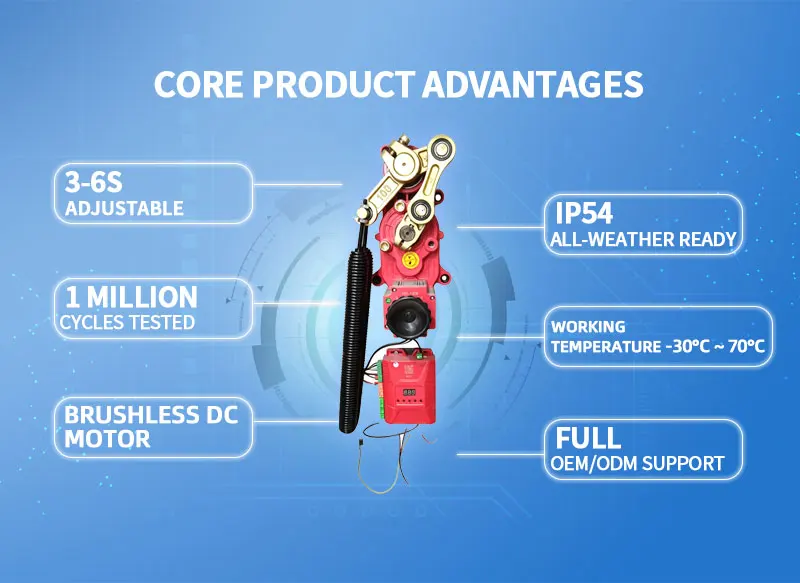
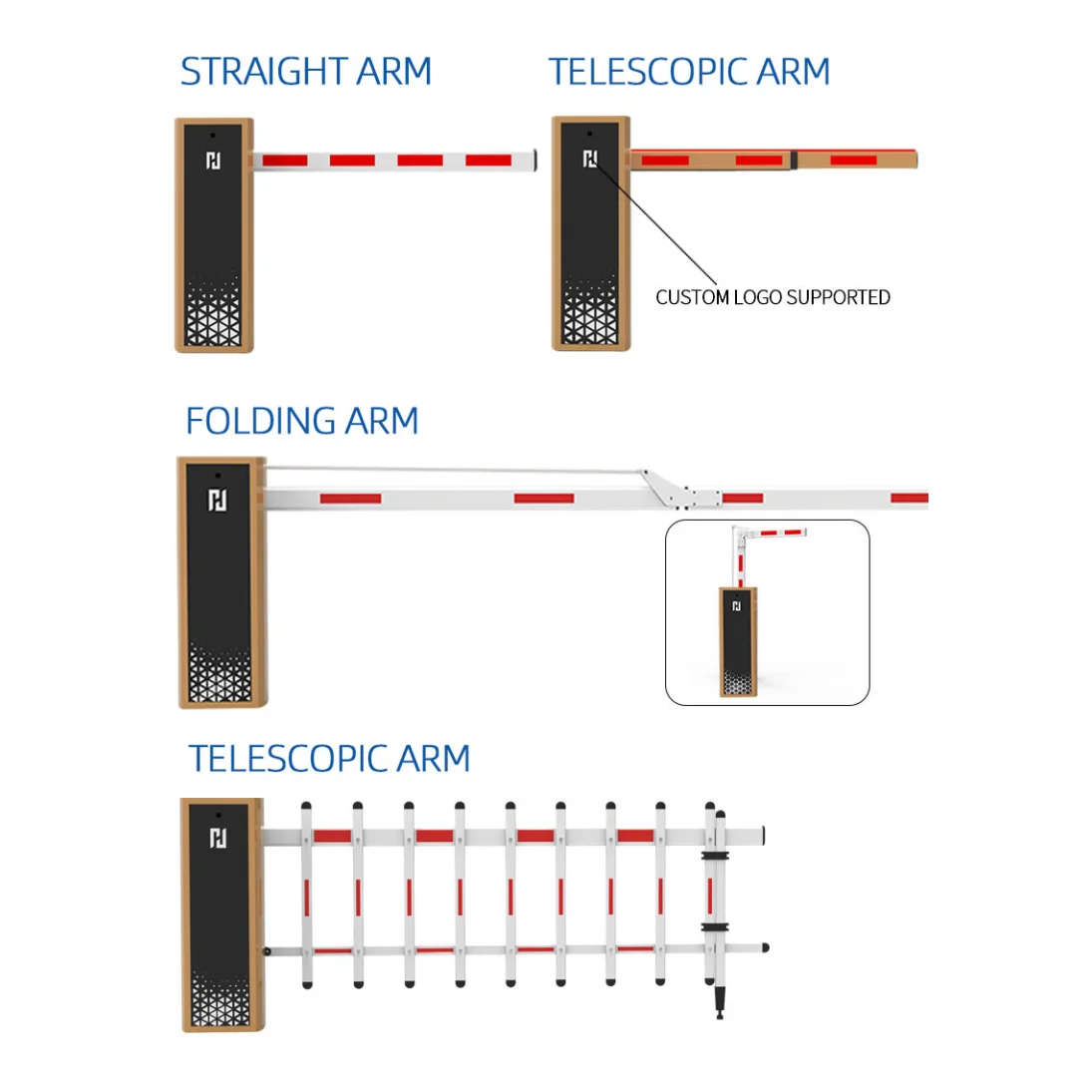
BAROXON's listed boom-arm options include straight arms, folding arms and fence-style arms, with model-dependent lengths. The product catalogue includes adjustable 3-6 metre options and other configurations; some product pages list additional custom spans. Treat these as model-specific options, not a guarantee that every arm type or length is available on every barrier. Ask the supplier to confirm the exact model and permitted arm length for your measured lane.
2. Match the barrier to daily traffic volume
Estimate how many vehicles use the entrance on a normal day and during the busiest hour. A private driveway or small residential car park may have very different operating needs from a shopping centre, office tower, hospital, factory or distribution hub. High-cycle sites should be assessed for duty cycle, motor type, opening speed, cooling requirements and expected maintenance access.
BAROXON's product pages describe heavy-duty brushless-motor barriers and high-speed options for busier entrances. Some listed models specify continuous-duty operation or daily-cycle figures, but these figures depend on the exact drive and configuration. Do not choose solely by a headline speed or cycle-life claim: request the technical sheet for the proposed model and confirm that its rated performance matches your traffic profile.
3. Choose the appropriate boom-arm type
Straight-arm barrier
A straight arm is a practical option for many open-air car parks, office entrances, residential compounds and commercial vehicle lanes where there is sufficient vertical clearance. Confirm the arm length, visibility markings, wind exposure and safe operating envelope before installation.
Folding-arm barrier
A folding arm may be more suitable where the barrier is installed below a low ceiling, inside a multi-storey car park or near an overhead obstruction. Measure the available headroom and the full arm movement path. A folding mechanism is not automatically suitable for every low-clearance site; the exact geometry must be checked against the selected model.
Fence-style barrier
A fence-style arm can help provide a more substantial physical obstruction where the access policy and site design call for it. Consider the lane's safety requirements, vehicle classes, wind exposure and the barrier's approved arm configuration. Confirm compatibility with the controller and safety devices before specifying this option.
4. Select motor drive and opening speed based on the job
A fast barrier can help reduce queues, but only if the lane layout, vehicle detection, access decision and safe stopping position support the intended throughput. Consider the full cycle - not only the time taken to raise the arm - including vehicle recognition, driver response, vehicle clearance and safe closing.
BAROXON's catalogue includes 24V DC brushless drive and servo-drive options, as well as other model-dependent motor configurations. Brushless drives may be attractive for frequent operation and reduced routine motor maintenance, while the final selection should be based on the technical specification, arm type, required speed, duty cycle, power supply and service plan. Confirm opening and closing times for the exact arm length and drive combination.
5. Consider the Saudi outdoor environment
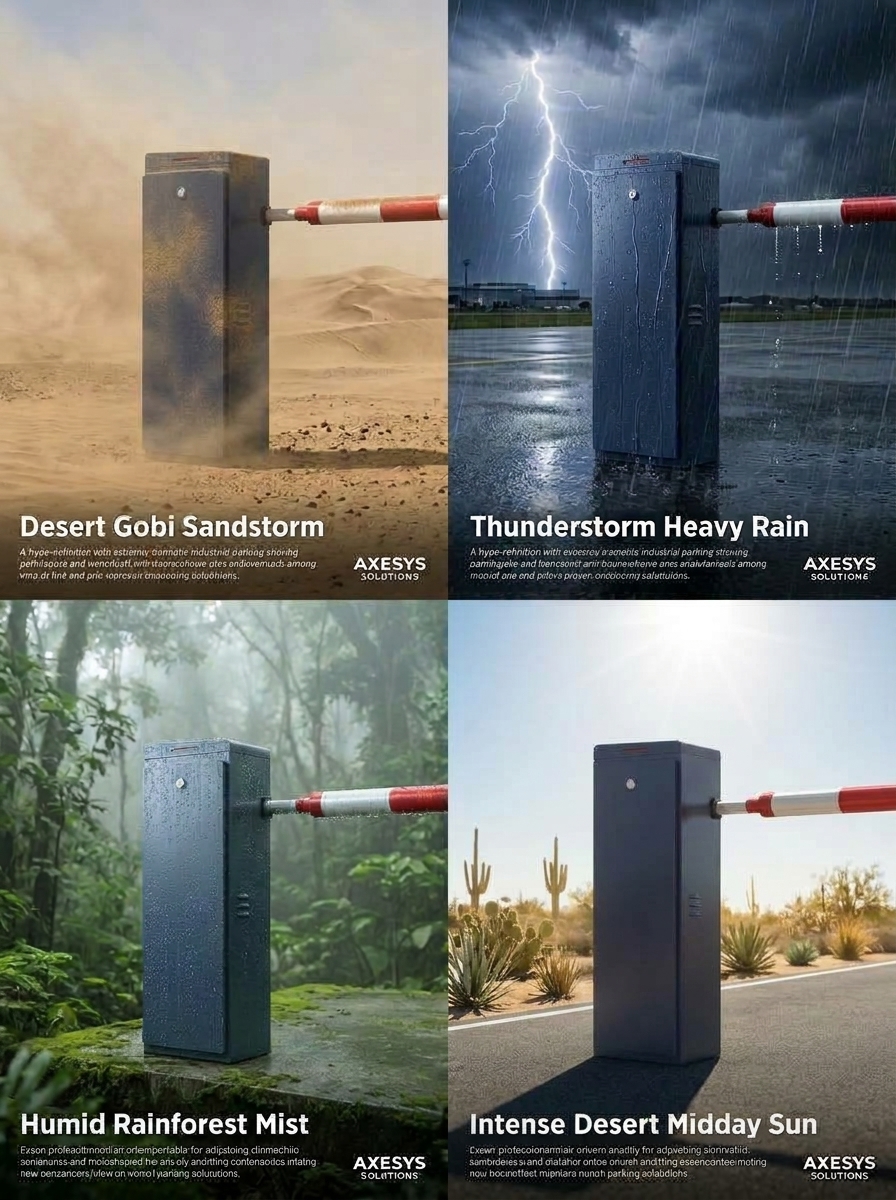
Outdoor entrances in Saudi Arabia may face intense sunlight, high temperatures, dust and wind, while coastal sites can also experience humid or saline air. Check the selected model's documented operating-temperature range, enclosure protection rating, installation requirements and maintenance guidance. Do not assume that every barrier in a product family has the same environmental rating.
Ask whether the proposed cabinet and control components are suitable for the actual installation position, including direct sun exposure, drainage, dust accumulation and access for servicing. If the site is exposed to strong winds, confirm the permitted arm type and length for the expected wind load. An overly long or unsuitable arm can affect safe operation and equipment life.
6. Decide whether the barrier needs ANPR/LPR, RFID or another access method
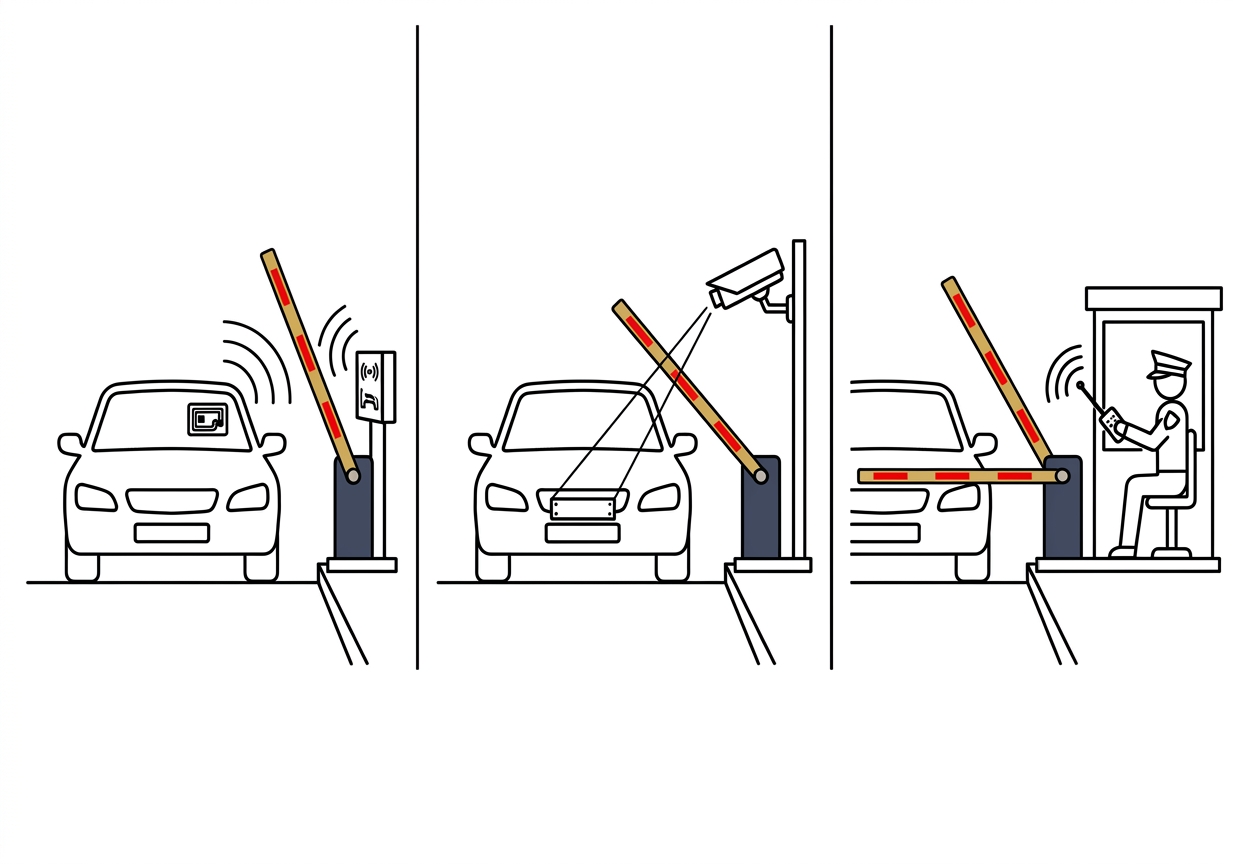
A boom barrier is the physical control point; an access method determines how the system decides whether a vehicle may enter. Choose the method around the user experience, traffic pattern and security policy.
- ANPR/ALPR/LPR number-plate recognition: Useful where registered vehicles should be recognised without drivers presenting a card. Confirm plate-format support, camera positioning, lighting performance and software integration.
- RFID access: Useful for authorised residents, staff or fleet vehicles with registered tags. Confirm reader range, tag placement and compatibility with the barrier controller.
- Cards, QR codes or staffed release: May suit visitors, temporary access, paid parking or sites that need a manual verification route.
- Hybrid access: Combining plate recognition with RFID, intercom or attended release can provide alternatives when a plate is unreadable or a visitor has not been registered.
BAROXON's Saudi site lists ALPR/LPR car plate systems and automatic RFID boom barriers alongside its boom gate range. If you plan to automate entry, specify the complete solution - including the camera or reader, access-control software, controller interface, vehicle detector and safety logic - rather than assuming the barrier alone provides every function.
7. Make safety equipment part of the specification
Safety should be specified before the purchase order, not added as an afterthought. Depending on the lane design and barrier model, the system may need a vehicle-detection loop, radar sensor, photocell or other approved safety input. The selected devices must be compatible with the controller and installed according to the manufacturer's instructions.
Confirm how the barrier behaves when a vehicle remains under the arm, a sensor fails, power is interrupted or an authorised operator needs manual control. Provide clear lane markings, warning signs and suitable lighting. Emergency access and egress must follow the site's approved procedures and applicable local requirements. Never bypass a safety input just to increase speed.
8. Check installation, maintenance and after-sales support
Before finalising a model, ask for the installation drawing, foundation or mounting requirements, wiring diagram, controller documentation, commissioning procedure and recommended maintenance schedule. Confirm that the cabinet can be opened safely for servicing and that technicians have enough space to reach the motor, control board and arm mechanism.
BAROXON's website describes installation guidance, commissioning support, operator training, spare parts and remote technical assistance. For a Saudi project, confirm the actual support scope, response arrangements, spare-parts lead time, warranty conditions and whether on-site assistance is available for your location. Include these details in the quotation or project agreement.
9. Use a simple site-selection matrix
| Site requirement | What to specify | Potential direction |
|---|---|---|
| Small residential entrance | Measured lane width, daily vehicle count, visitor process | Standard automatic barrier with suitable access method |
| Office or commercial car park | Peak-hour throughput, tenant and visitor access, event logs | Automatic barrier integrated with access software or LPR |
| Busy shopping centre | Queue management, safe operating speed, payment or ticketless workflow | High-cycle barrier and parking-management integration |
| Warehouse or logistics park | Heavy vehicle mix, fleet access, high cycle rate, lane width | Heavy-duty barrier with suitable RFID or other fleet credential |
| Multi-storey car park with low headroom | Ceiling clearance and arm movement path | Consider a compatible folding-arm configuration |
| Exposed outdoor entrance | Temperature, dust, wind, cabinet protection and maintenance | Model selected against documented environmental ratings |
10. Questions to ask before requesting a quotation
Prepare answers to these questions so the supplier can recommend a model based on evidence rather than guesswork:
- What is the measured clear lane width?
- How many vehicle movements are expected per day and during the busiest hour?
- What vehicle types use the entrance, including vans, trucks or emergency vehicles?
- Is the arm required to be straight, folding or fence-style?
- What is the available vertical clearance and installation space?
- Is the site indoors, outdoors, coastal or exposed to strong winds and dust?
- Is the access method ANPR/LPR, RFID, cards, QR codes, intercom or a combination?
- Which safety devices and emergency procedures are required?
- What motor drive, speed and duty cycle are appropriate for the measured traffic?
- What installation, commissioning, training, warranty and spare-parts support is included?
Frequently asked questions
What is the best BAROXON boom barrier for a residential compound?
There is no single best model for every compound. Measure the lane, estimate traffic, decide how visitors will be approved and select an access method. Then confirm the arm length, motor drive, safety devices and environmental rating for the exact model.
Should I choose a high-speed barrier for a busy entrance?
A high-speed model may help where traffic is frequent, but the complete process must remain safe. Confirm the opening time for the actual arm length, vehicle-detection arrangement, queue space and controller settings before selecting a high-speed option.
Is a folding-arm boom barrier suitable for an underground car park?
It may be suitable when overhead clearance is limited, but the folded-arm geometry and mounting position must be checked against the actual ceiling height and lane layout. Ask for a drawing of the selected model before installation.
Can a BAROXON boom barrier work with an LPR camera or RFID reader?
BAROXON lists LPR/ALPR and automatic RFID solutions in its product range. For a project, verify the exact barrier controller interface, reader or camera model, software compatibility and safety inputs rather than assuming every combination is plug-and-play.
What should I verify for an outdoor entrance in Saudi Arabia?
Check the model's documented operating temperature, enclosure protection rating, wind suitability, arm configuration, power requirements and maintenance instructions. Ask the supplier to confirm the selected model against the actual site conditions.
Conclusion
The right BAROXON boom barrier is the one specified for your measured lane, traffic demand, vehicle mix, arm clearance, access-control method, safety requirements and maintenance plan. For Saudi facilities, pay particular attention to outdoor conditions, peak-hour queueing, authorised visitor access and the documented rating of the exact model. A site survey and a written technical specification will help avoid mismatched arm lengths, unnecessary speed, incompatible access equipment and preventable installation changes.
To compare suitable options, review BAROXON's boom barrier and boom gate range, then share the site measurements, expected traffic and required access-control method when requesting a quotation.
Latest News
Straight vs Folding Boom Barrier Arms
Straight arm or folding arm boom barrier? How overhead clearance, lane width, traffic and maintenance decide which arm configuration suits a site.
2026-10-28
Parking Barriers for Underground Car Parks
How to choose a barrier for an underground car park: headroom, folding-arm geometry, traffic duty, safety sensors and access-control options.
2026-10-28
RFID vs ANPR: Choosing a Parking System
RFID or ANPR for vehicle access? How each identifies a vehicle, where each fits, what to compare on cost, and when to combine both methods.
2026-10-28
Questions to Ask a Barrier Supplier
The questions to ask a barrier supplier before buying: exact model, lane suitability, safety devices, integration, warranty and the total quoted price.
2026-10-28
Comparing Parking Barrier Manufacturers
How to compare parking barrier manufacturers and suppliers: specifications, environmental suitability, integration, support and total cost of ownership.
2026-10-28
Parking Barrier Project Planning Checklist
A practical checklist for planning a parking barrier project: site survey, lane geometry, equipment selection, safety, interfaces and acceptance testing.
2026-10-28
Baroxon® | Leading Boom Barrier Manufacturer
Advanced Security Access Control and Intelligent Parking Solutions.
Company Strength
Adequate Inventory
Fast Shipping
Our Products
CONTACT US
Address: No. 2 Wanshou Road, International Innovation Industrial Park, Jinan, Shandong, China






© COPYRIGHT 2025 Baroxon® | Leading Boom Barrier Manufacturer

Contact Us
Our passion is to bring your ideas to life. Work with our design team to create a one-of-a-kind custom finish or cladding system to create a truly unique space. Together we can make your story stand out. If you need something to request a sample, request pricing, or request a demo, please fill out the contact form below. Explain your request in as much detail as you can and a representative will contact you within 1 business day.