
Straight Arm vs. Folding Arm Boom Barrier: Which Is Better?
Release time:
2026-10-28
Choosing between a straight arm and a folding arm boom barrier depends mainly on the available overhead clearance, entrance layout, lane width and the way vehicles move through the site. For many open-air car parks and compound entrances in Saudi Arabia, a straight arm is a practical choice. Where the barrier must open beneath a low ceiling or within a restricted-height entrance, a folding arm may be more suitable.
1. What Is a Straight Arm Boom Barrier?
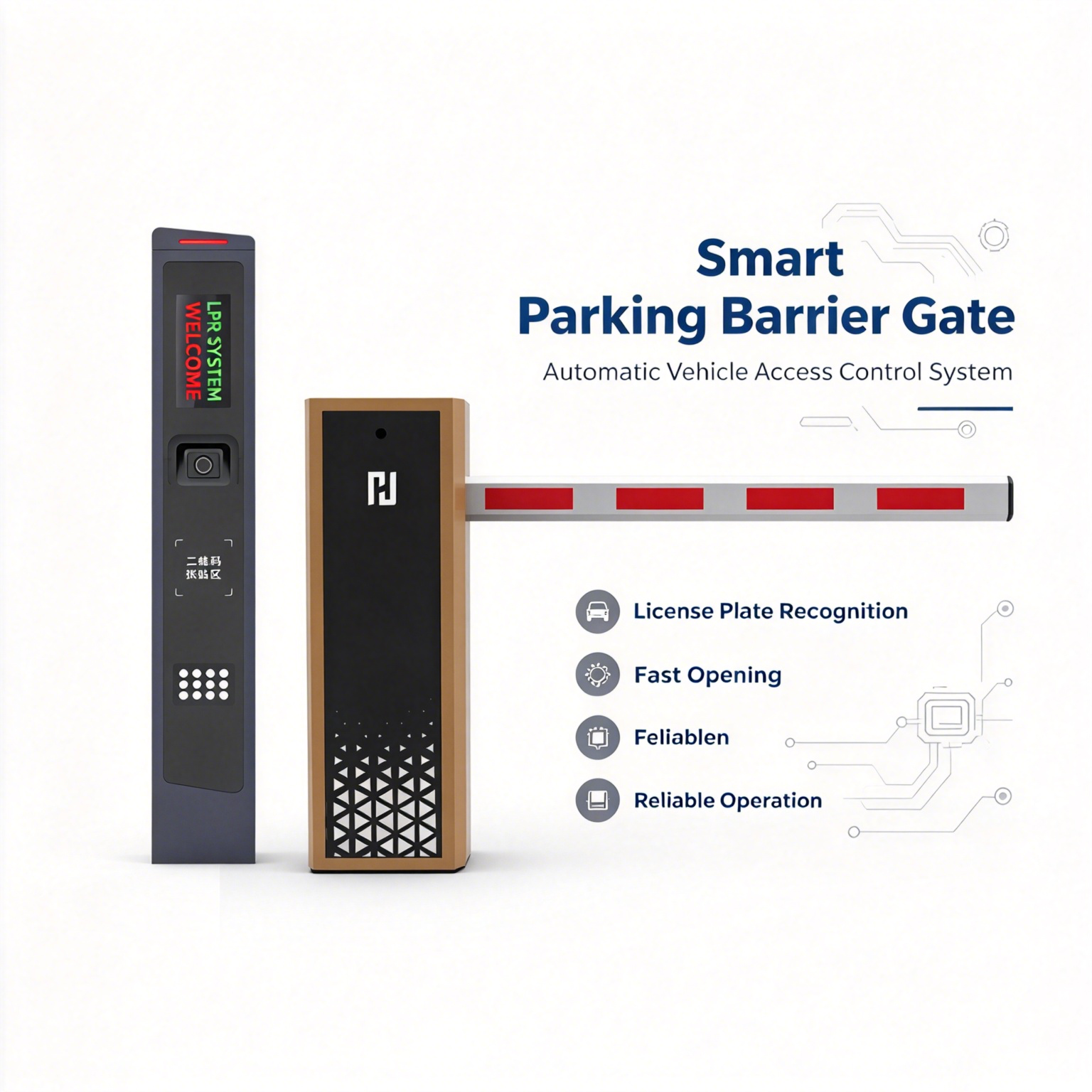
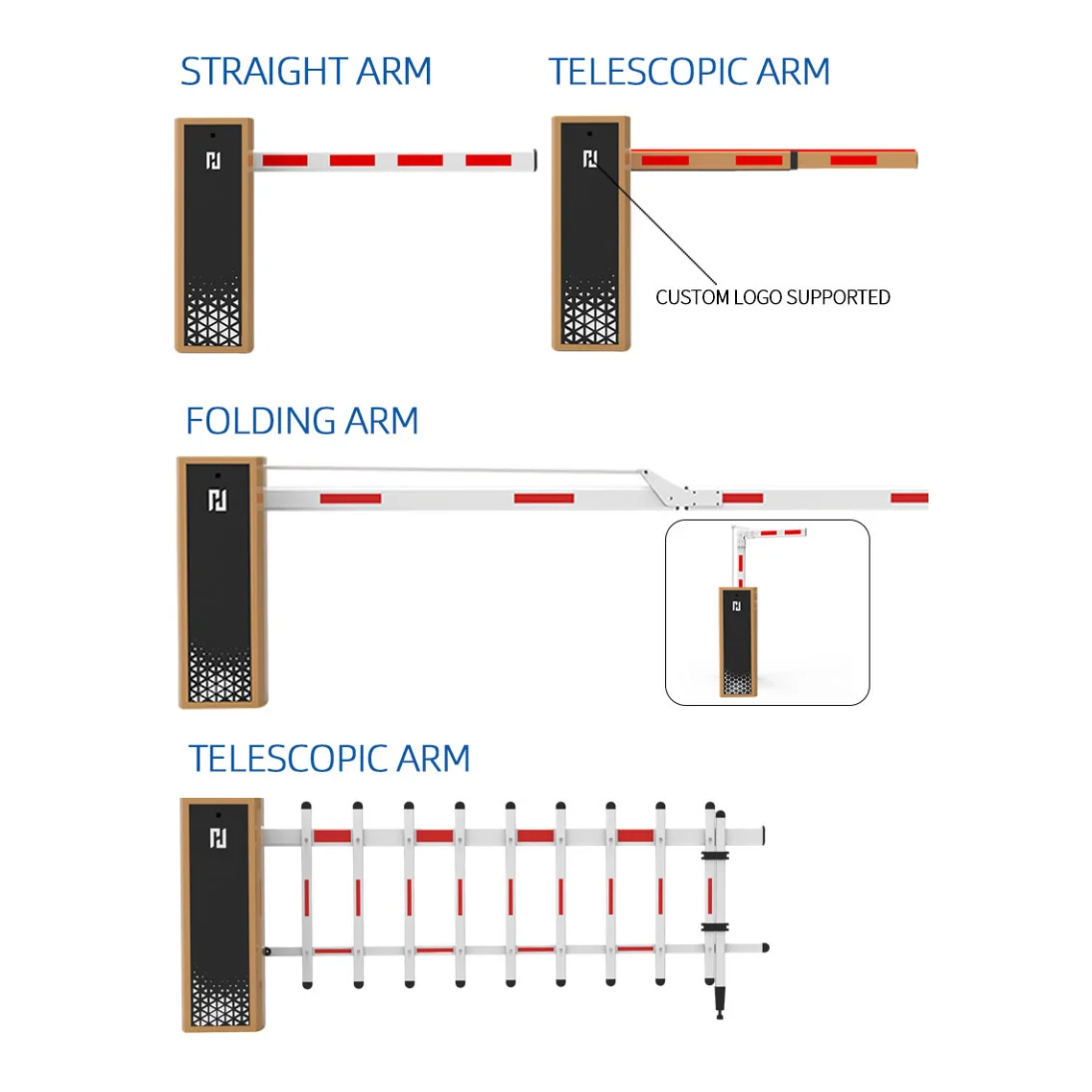
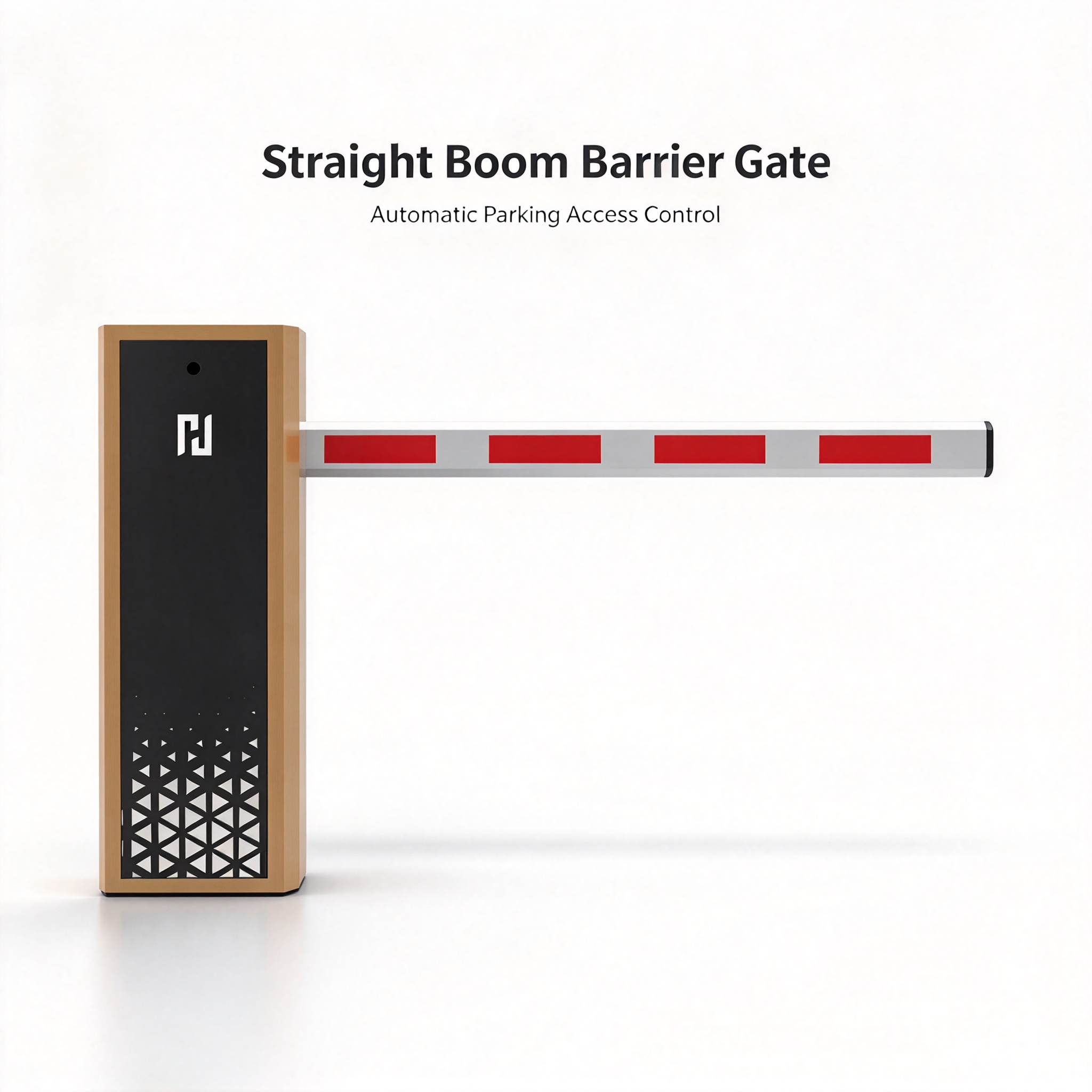
A straight arm boom barrier uses one long, rigid arm that lifts to allow authorised vehicles to pass. Its simple layout is suitable for many standard parking entrances, office buildings, gated residential compounds, retail car parks, factories and logistics facilities. Baroxon lists straight-arm boom barrier options within its automatic boom barrier range, alongside folding and fence-style arm configurations.
Main advantages of a straight arm
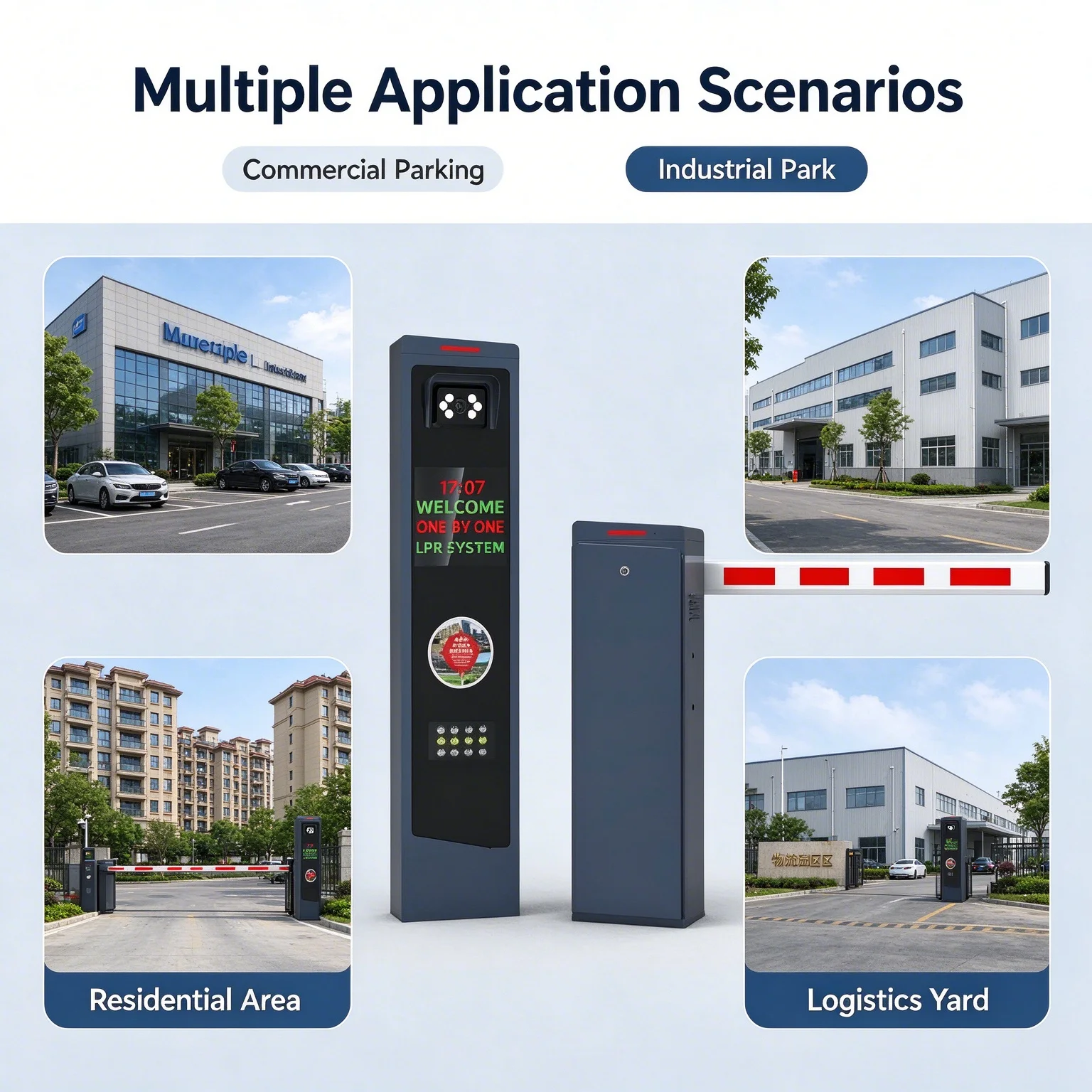
- Straightforward lane coverage: A straight arm is a good starting point for a conventional entrance where the arm can rise without hitting a ceiling, sign, canopy or other obstruction.
- Clear visual indication: The raised and lowered positions are easy for drivers and security staff to understand.
- Flexible access-control integration: Depending on the selected model and controller, a straight-arm barrier can be integrated with ANPR/LPR cameras, RFID readers, cards, QR credentials, intercom release or a parking-management system.
- Suitable for many outdoor entrances: The correct arm length, motor, protection rating and foundation still need to be selected for the site conditions.
2. What Is a Folding Arm Boom Barrier?
A folding arm boom barrier uses a jointed arm that folds as it opens. This design can help when a conventional straight arm would require more vertical space than the entrance allows. Depending on the selected configuration, folding arms may be available with different folding angles, including 90° or 180° options. Confirm the actual geometry, operating envelope and compatibility with the proposed barrier model before ordering.
Main advantages of a folding arm
- Better suited to restricted overhead clearance: The folding mechanism may allow operation where a ceiling, basement slab, canopy or low entrance structure limits the available height.
- Useful for selected underground car parks: It can be considered for basement parking entrances, subject to a measured clearance survey and model-specific drawings.
- Can support automated access control: Folding-arm configurations can be specified as part of a broader system using suitable access credentials and safety devices.
3. Straight Arm vs. Folding Arm: Key Differences
The table below compares the two arm types on the factors that usually decide the choice. It covers these two configurations only; the full barrier gate arm options supported by a given model should be confirmed with the supplier.
| Selection factor | Straight arm | Folding arm |
|---|---|---|
| Overhead clearance | Best when there is enough room for the arm to rise | Worth considering where ceiling height or an overhead obstruction limits movement |
| Typical layout | Open-air car parks, compound gates and standard vehicle lanes | Selected basement entrances and restricted-height access points |
| Mechanical design | One straight arm | Jointed arm that folds during opening |
| Installation checks | Lane width, arm length, lift path and foundation | All straight-arm checks plus folded geometry and joint clearance |
| Maintenance | Inspect arm, balance, fasteners and drive mechanism | Inspect all standard components plus folding joints and alignment |
| Best selection method | Confirm that the complete arm movement is unobstructed | Confirm both the raised and folded positions fit the real site |
4. Which Barrier Is Better for Saudi Arabian Sites?
There is no single winner for every Saudi project. The better option is the one that fits the measured site conditions and required traffic performance. In Riyadh, Jeddah, Dammam and other Saudi locations, project teams should assess outdoor exposure, dust, ambient temperature, traffic frequency and available maintenance support rather than selecting by arm style alone.
Choose a straight arm when:
- The entrance is open to the sky or has enough vertical clearance for the full lifting path.
- The lane layout is conventional and the required arm length is supported by the selected model.
- The site needs controlled access for residents, staff, visitors, customers or authorised fleet vehicles.
- The project requires integration with ANPR/LPR, RFID or another compatible access-control platform.
Choose a folding arm when:
- A basement ceiling, low canopy, beam or other structure restricts the arm’s vertical movement.
- A site survey confirms that the folding arm’s complete movement fits without striking vehicles, walls, signs or services.
- The selected model is explicitly available with the required folding configuration and lane coverage.
- The installer can provide drawings and commissioning checks for the folded arm’s clearance and safety zone.
5. Measure the Site Before You Specify the Arm
Do not estimate clearance by eye. Measure the lane width, available headroom, mounting position, kerbs, slopes, ceiling beams, lighting, signs, cable trays and nearby pedestrian routes. Check the entire movement path of the arm, not only its resting position. For a folding arm, confirm the clearance at each stage of folding and opening.
Before finalising the specification, request the manufacturer’s dimensional drawing for the exact barrier model and arm length. Verify whether the stated arm length refers to the arm itself or the effective lane span, and confirm the recommended mounting orientation. A drawing for a different arm configuration should not be treated as proof that the proposed installation will fit. For the wider purchasing sequence, see the boom barrier gate buying guide for Saudi projects.
6. Match the Arm to Lane Width and Traffic Volume
Arm length and duty cycle should be considered together. A wider lane or a longer arm can place different demands on the drive mechanism and balancing system. High-traffic shopping centres, hospitals, logistics parks and commercial compounds may need a higher-duty model than a small residential entrance. Ask the supplier to confirm the rated duty cycle and opening speed for the exact configuration, rather than relying on a headline speed alone.
Baroxon product listings describe multiple drive options, including 24 V DC brushless, AC and servo configurations, as well as different arm types and configurable operating speeds. These are model-dependent options, not a guarantee that every motor, speed and arm combination is available together. Obtain a written configuration confirmation for the project.
7. Integrate the Barrier with Vehicle Access Control
A boom barrier controls physical passage; the access-control system decides whether a vehicle is authorised. Depending on the site, a compatible setup may use ANPR/LPR number-plate recognition, long-range RFID tags, access cards, QR codes, an intercom or a parking-management platform. Where a lane needs the camera and the barrier as one unit, an LPR-integrated barrier system may reduce the number of separate components; check the interface, controller inputs, trigger logic and failure behaviour before specifying the equipment.
For an ANPR/LPR installation, coordinate the camera position, capture angle, lighting, plate visibility, vehicle stopping point and barrier trigger timing. In Saudi projects, validate recognition performance against the actual plate formats and lighting conditions at the site. Recognition should not be treated as a substitute for physical safety devices.
8. Safety Devices and Emergency Operation
Whichever arm type is selected, the complete installation must be designed to reduce the risk of the arm striking a vehicle or person. Depending on the risk assessment and controller compatibility, consider vehicle-detection loops, photoelectric sensors, radar, safety edges, warning lights and anti-collision logic. The installer should confirm which devices are supported and how the system behaves if a sensor, communication link or power supply fails.
Keep a safe pedestrian route separate from the vehicle lane wherever practicable. Provide clear traffic signs and markings, and make sure emergency access and release procedures are documented and tested. Applicable local building, fire, accessibility and site-safety requirements should be confirmed with the project’s responsible engineer and relevant authorities.
9. Consider Heat, Dust and Outdoor Exposure
Saudi sites can experience high temperatures, dust and strong sunlight. Specify equipment using the actual site’s operating conditions and the manufacturer’s published limits. Check the housing protection rating, installation location, ventilation and shading where appropriate, cable glands, electrical protection and the maintenance plan. Do not assume that a product is suitable for every outdoor environment simply because it is described as weatherproof.
Ask the supplier to confirm the permitted ambient temperature range, IP rating and any model-specific limits in writing. Establish a regular inspection schedule for dust accumulation, arm balance, fasteners, joints, springs where fitted, sensors and the drive mechanism. Maintenance intervals should follow the manufacturer’s instructions and the actual operating duty.
10. Installation and Maintenance Checklist
Before installation, confirm the following:
- Measure the lane width and the full arm movement envelope.
- Verify the exact arm type, length and folding angle on the quotation and drawing.
- Confirm the foundation, mounting orientation, power supply and cable route.
- Check compatibility with ANPR/LPR, RFID, access cards or the existing parking system.
- Confirm safety devices, warning signals, emergency release and fault response.
- Obtain written confirmation of duty cycle, operating speed, temperature range and protection rating.
- Test opening and closing limits, arm balance, obstacle response and access-control triggers during commissioning.
- Train operators and document routine inspection and fault-reporting procedures.
11. Common Selection Mistakes to Avoid
Mistake 1: Choosing by price alone. A low initial price may not reflect the required duty cycle, safety equipment, installation work or long-term maintenance needs.
Mistake 2: Assuming a folding arm always fits a low ceiling. The jointed arm still needs a defined movement envelope. Confirm the real geometry with drawings and a site survey.
Mistake 3: Selecting an arm before measuring the lane. Arm length, lane width, motor capability and wind exposure must be considered together.
Mistake 4: Treating access recognition as a safety system. ANPR, RFID and QR access authorise entry but do not replace obstacle detection or safe operating procedures.
12. Frequently Asked Questions
Is a straight arm boom barrier better than a folding arm?
A straight arm is often the practical choice for an open entrance with sufficient vertical clearance. A folding arm is worth considering where a ceiling or other overhead structure restricts the lifting path. The site measurements and the exact model determine the better option.
Is a folding arm suitable for an underground car park in Saudi Arabia?
It can be suitable if the selected model’s folding geometry fits the entrance and the installation complies with applicable safety requirements. Measure the lowest obstruction and verify the arm’s complete movement with the manufacturer’s drawing before purchase.
Can both arm types work with ANPR/LPR or RFID?
Potentially, yes. Compatibility depends on the barrier controller, the access-control equipment, the system interface and the chosen product configuration. Confirm the proposed combination with the supplier.
Which arm is better for a high-traffic commercial entrance?
Neither arm type is automatically better for high traffic. Prioritise the rated duty cycle, required throughput, arm length, drive configuration, safety devices and maintenance support. Select the arm shape only after confirming the site clearance.
What information should I send a supplier for a quotation?
Provide the site location, lane width, available headroom, indoor or outdoor use, estimated vehicle movements, preferred access method, power supply and any drawings or photographs showing obstructions. Ask for a model-specific proposal, dimensional drawing and written technical confirmation.
Conclusion: Choose the Arm That Fits the Site
For a conventional, unobstructed vehicle entrance, a straight arm is often the simplest starting point. For a restricted-height entrance, a folding arm may solve a clearance problem—but only when the measured space accommodates its full movement. For Saudi projects, final selection should also account for traffic duty, heat and dust exposure, access-control integration, safety devices and the availability of maintenance support.
To compare compatible configurations, review the Baroxon boom barrier and boom gate range and request a model-specific recommendation based on your lane dimensions and operating requirements.
Latest News
Underground Car Park Barrier Guide, Saudi Arabia
Choose an underground car park barrier in Saudi Arabia: clearance, folding-arm geometry, traffic duty, safety sensors, access control and maintenance.
2026-10-28
Straight Arm vs. Folding Arm Boom Barrier: Which Is Better?
Straight arm or folding arm boom barrier? Compare overhead clearance, lane width, traffic volume and Saudi site conditions before you specify a barrier arm.
2026-10-28
Questions to Ask a Parking Barrier Supplier
Thirteen questions to ask a parking barrier supplier in Saudi Arabia: model specs, safety devices, ANPR/RFID integration, climate rating, warranty and total cost.
2026-10-28
RFID vs ANPR Parking Systems for Saudi Sites
Compare RFID and ANPR parking systems for Saudi Arabia: how tags and number plate recognition work, cost, security, traffic flow and when to combine both.
2026-10-28
Parking Barrier Project Planning in Saudi Arabia
Plan a parking barrier project in Saudi Arabia, from site survey and lane design to barrier selection, ANPR/RFID integration, safety testing and handover.
2026-10-28
How to Compare Parking Barrier Manufacturers and Suppliers
Compare parking barrier manufacturers and suppliers on specifications, safety, Saudi climate suitability, integration, warranty, spare parts and total cost.
2026-10-28
Baroxon® | Leading Boom Barrier Manufacturer
Advanced Security Access Control and Intelligent Parking Solutions.
Company Strength
Adequate Inventory
Fast Shipping
Our Products
CONTACT US
Address: No. 2 Wanshou Road, International Innovation Industrial Park, Jinan, Shandong, China






© COPYRIGHT 2025 Baroxon® | Leading Boom Barrier Manufacturer

Contact Us
Our passion is to bring your ideas to life. Work with our design team to create a one-of-a-kind custom finish or cladding system to create a truly unique space. Together we can make your story stand out. If you need something to request a sample, request pricing, or request a demo, please fill out the contact form below. Explain your request in as much detail as you can and a representative will contact you within 1 business day.